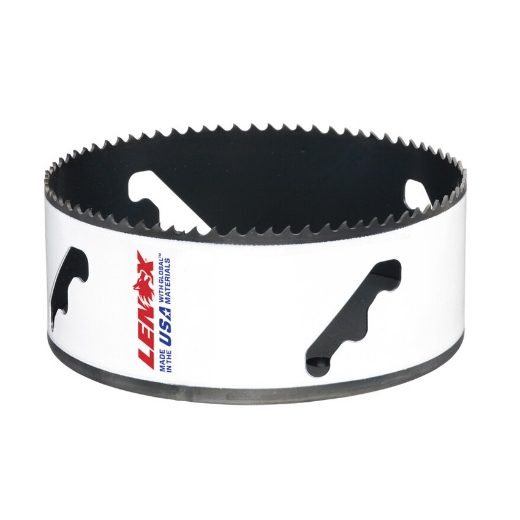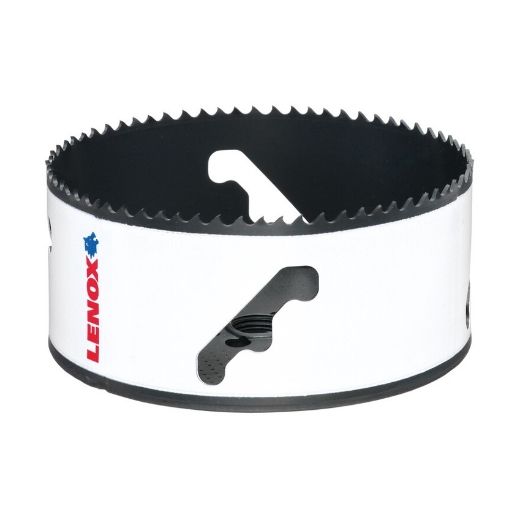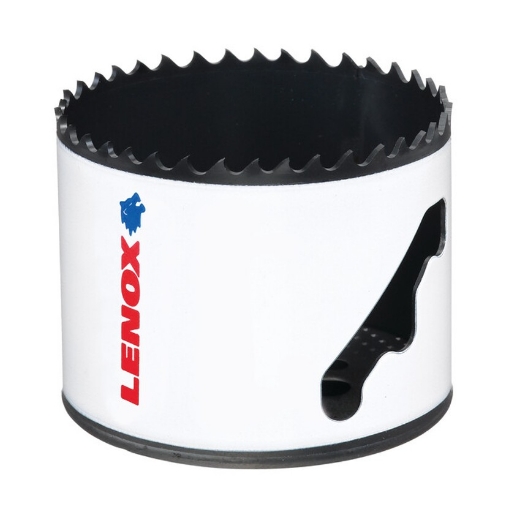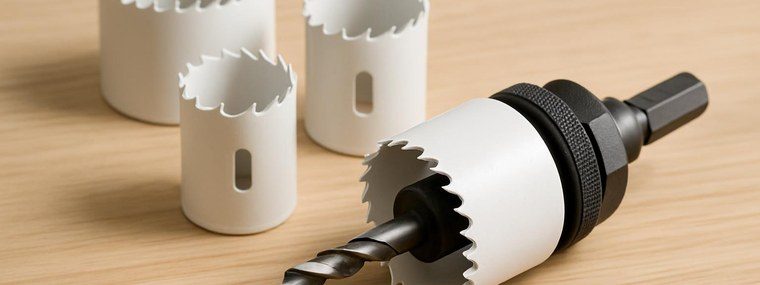
Match the hole saw to the material first, then read off the diameter you need. Use a carbide or bi-metal hole saw for wood, plasterboard and PVC, an HSS hole saw for steel and non-ferrous metals, and a diamond hole saw for tile, porcelain and ceramics. The diameter (D) is the finished hole; cutting depth (I) decides how thick a panel you can pass through. Our best-selling cutting accessory is the CMT quick-change holder with HSS drill. Always centre the cut with the right pilot drill, or the saw will skate.
Which hole saw fits your job? Browse the full hole saw range at DHZ-Proshop for wood, metal and tile cutters plus the matching arbors and pilot drills.
- Type follows material: carbide/bi-metal for wood and PVC, HSS for metal, diamond for tile.
- D is the finished hole diameter; I is the maximum cutting depth (how thick a panel you can cut).
- CMT multi construct wood hole saws cut up to 52mm deep; the metal range cuts up to 38mm.
- Our top-selling accessory is the CMT quick-change holder with HSS drill.
- Never run a hole saw on hammer mode, and always start with a centred pilot drill.
Which hole saw for which material?
The right hole saw depends on the material and the diameter you need to cut. The table below pairs real CMT hole saws from our range with their key spec and best use. Browse them all in the hole saw category.
| Product | Brand | Key spec | Best for |
|---|---|---|---|
| CMT multi construct 152mm | CMT | D=152mm, I=60mm, carbide, 5 teeth | Large holes in wood and PVC |
| CMT multi construct 70mm | CMT | D=70mm, I=60mm, carbide, 3 teeth | Sockets, downlights in wood/PVC |
| CMT multi construct 68mm | CMT | D=68mm, I=60mm, carbide, 3 teeth | Standard 68mm back boxes |
| CMT HSS 68mm (metal) | CMT | D=68mm, I=45mm, HSS, max depth 38mm | Steel and aluminium panels |
| CMT HSS 35mm (metal) | CMT | D=35mm, I=45mm, HSS, max depth 38mm | Cable glands, conduit in metal |
| CMT quick-change holder + HSS drill | CMT | HEX 8.5mm shank, pilot drill included | Fast saw swaps, centred starts |
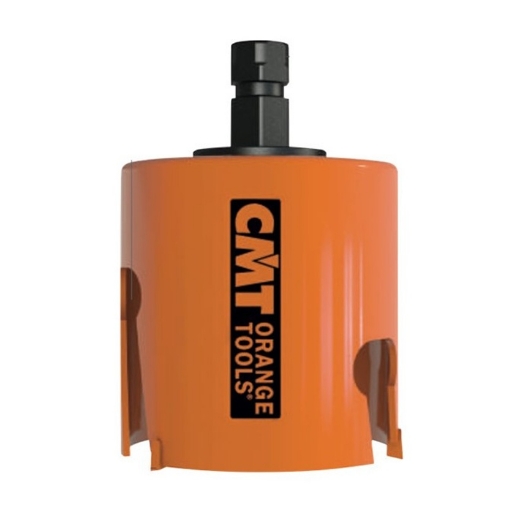
Wood and PVC
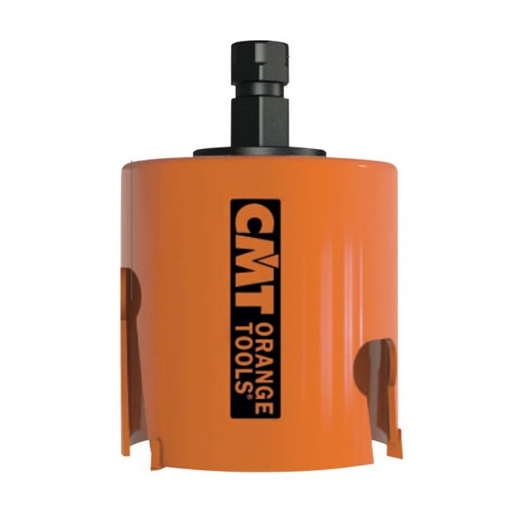
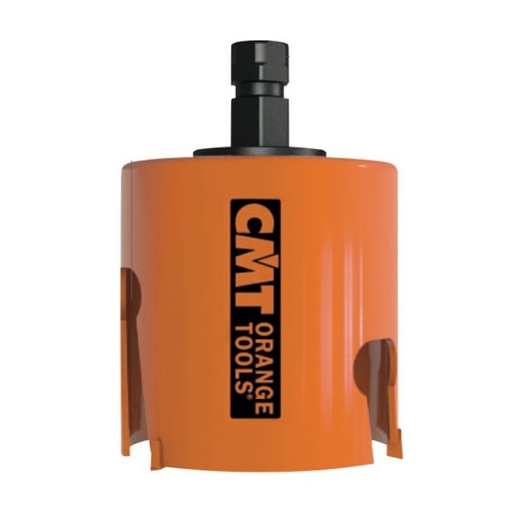
Back boxes, downlights or pipe pass-throughs in wood, plasterboard and PVC? The CMT multi construct cuts up to 52mm deep with carbide teeth.
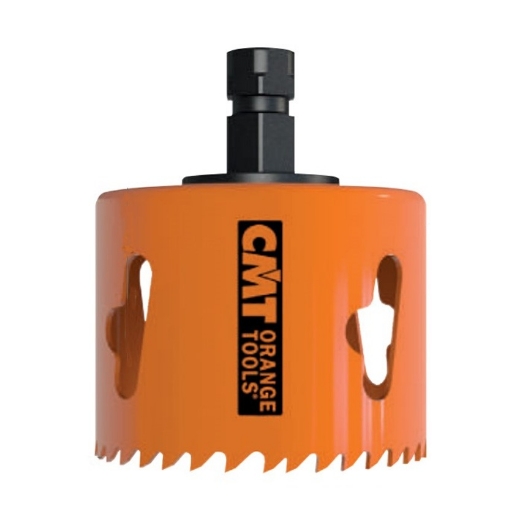
Metal and non-ferrous
Steel sheet, aluminium or copper? The CMT HSS hole saws come with their own adapter and cut to a 38mm depth.
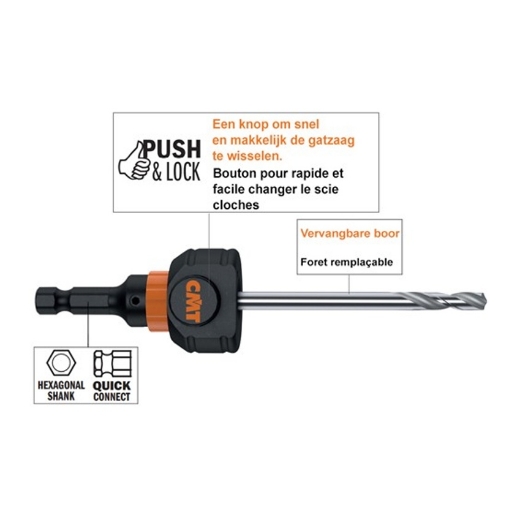
Holder and pilot
One holder, fast saw swaps, a centred start every time. The CMT quick-change holder ships with an HSS pilot drill ready to go.
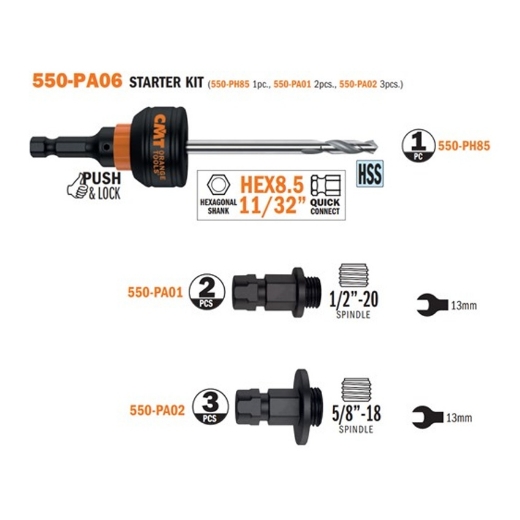
Starter set
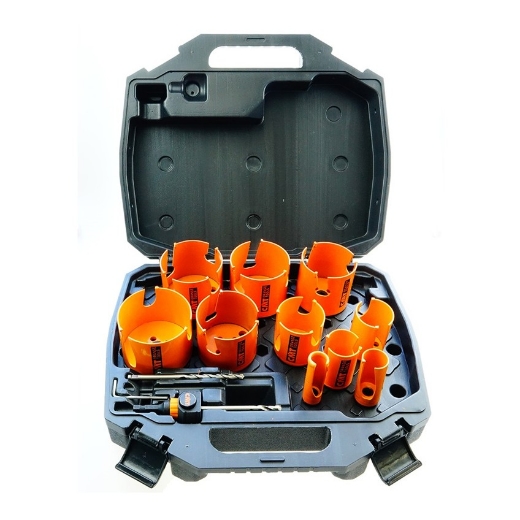
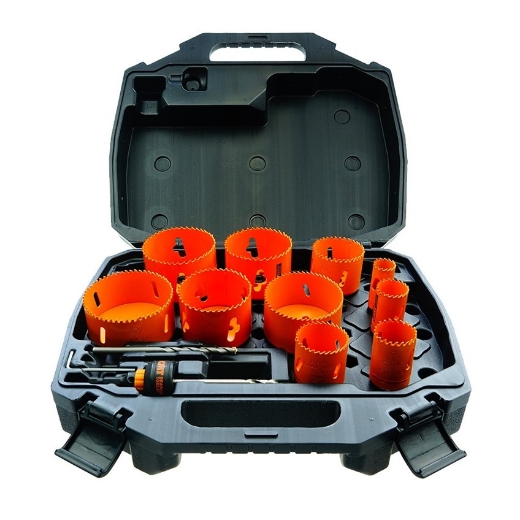
New to hole saws? The CMT starter set bundles the HSS drill, quick-change holder and adapters so you are ready out of the box.
Start with the material, not the diameter
The first question is what you are cutting, because the tooth material decides whether the saw cuts cleanly or burns out. Carbide and bi-metal teeth handle wood, plasterboard and plastics; HSS suits sheet metal and non-ferrous metals; a diamond rim is the only choice for hard tile and porcelain. Get the type wrong and the saw stalls, overheats or shatters the work.
Machine setting matters just as much. Run a hole saw in plain rotary mode, never on the hammer or impact setting. Impact action cracks the teeth and ruins the cut. Match speed to diameter: the bigger the saw, the slower you go.
Wood, plasterboard and PVC: carbide hole saws
For wood, MDF, plasterboard and PVC, use a carbide-tipped hole saw such as the CMT multi construct range. Its hard teeth shear the fibres cleanly and cut up to a 52mm depth, enough for double plasterboard or thick panels. The 68mm and 70mm sizes cover standard electrical back boxes and downlights; the 152mm tackles ventilation and large pipe pass-throughs.
Let the saw do the work at a steady, medium speed and clear the dust regularly so the teeth keep biting. Back the panel with a scrap board to stop break-out on the exit side. For deep cuts, ease off and reverse occasionally to eject the core, which prevents the slug from jamming inside the cup.
Metal and non-ferrous: HSS hole saws
For steel, aluminium and other non-ferrous metals, choose an HSS hole saw like the CMT metal range, supplied with its own adapter and cutting to a 38mm depth. HSS withstands the heat that building up when cutting metal. The 32mm and 35mm sizes suit cable glands and conduit; the 44mm and 68mm handle larger penetrations and panel cut-outs.
Speed and cooling are everything in metal. Run a low speed, keep firm even pressure and add cutting oil to carry away heat. Too fast and the rim work-hardens the steel and goes blunt. Centre-punch or use a sharp pilot drill so the saw bites instead of wandering across the surface.
In our Beerse shop, fitters who cut sheet metal almost always pair the CMT HSS hole saw with a cutting oil and a slow drill setting, because that is what keeps the rim sharp job after job.DHZ-Proshop vakteam, Beerse
Tile, porcelain and ceramics: diamond hole saws
Tile, porcelain and ceramics demand a diamond hole saw, never a toothed wood or metal cutter. The diamond-coated rim grinds through hard, brittle glaze without cracking it. Run it on a low speed with water cooling, which flushes the slurry and stops the rim and the tile from overheating.
Start at a slight angle to bite the glaze, then bring the saw upright once the rim has scored a ring. A strip of masking tape on the surface stops it skating at the start. Keep the cut wet from the first second; a dry diamond rim glazes over and stops cutting fast.
How do you choose the right hole saw size?
Pick the diameter (D) to match the finished hole you need, and check the cutting depth (I) against the thickness you must pass through. A standard single back box needs 68mm; downlights typically take 70mm to 75mm; large vents and pipes can need 150mm or more, which the CMT 152mm covers.
| Job | Typical diameter | CMT option |
|---|---|---|
| Cable gland / conduit (metal) | 32 – 35mm | HSS 32mm / 35mm |
| Larger metal penetration | 38 – 44mm | HSS 38mm / 44mm |
| Single back box (wood/PVC) | 68mm | CMT 68mm |
| Downlight / small vent (wood/PVC) | 70mm | CMT 70mm |
| Large vent / pipe (wood/PVC) | 152mm | CMT 152mm |
If the panel is thicker than the saw's cutting depth, cut from both sides or drill a through pilot to keep the cut aligned. The CMT wood saws give you 52mm of cut, the metal range 38mm. Measure the fitting's outside diameter, not its nominal size, and round up if you are unsure.
Why does the arbor and pilot drill matter?
The pilot drill centres the hole saw and stops it skating across the surface at the start. Without a sharp pilot, the rim wanders and the hole ends up off-mark and oval. The CMT quick-change holder with HSS drill is our best-selling accessory, precisely because it lets you swap saws fast while keeping a centred start.
Keep a spare pilot drill on hand, since it wears before the saw cup does. The CMT HSS pilot drill fits straight into the quick-change holder. For a complete first kit, the CMT starter set bundles the drill, holder and adapters, and the Lenox Snap-Back 2L adapter speeds saw changes on Lenox-pattern cups.
Common mistakes
- Running on hammer mode: impact action cracks hole saw teeth and shatters tile. Always use plain rotary mode.
- Wrong type for the material: a wood saw stalls in steel and a metal saw glazes on tile. Match teeth to material first.
- Cutting too fast: high speed burns the rim, work-hardens metal and overheats diamond. Slow down as the diameter grows.
- Skipping cooling on tile: a dry diamond rim glazes over and cracks the tile. Keep diamond cuts wet from the first second.
See the full selection in our hole saw range or find all your tools and building materials in Belgium on the DHZ-Proshop webshop.
Frequently asked questions about hole saws
Which hole saw should I use for metal?
Which hole saw should I use for wood?
Which hole saw should I use for brick or tile?
How do I use a hole saw properly?
What hole saw size do I need for an electrical back box?
What is the difference between bi-metal, carbide and diamond hole saws?
Compiled by the DHZ-Proshop vakteam, your DIY and trade supplier with a shop and collection point in Beerse. What we recommend most across the counter is to buy the quick-change holder with pilot drill first, then add the saw diameters you actually need; it keeps every start centred and every swap fast. Questions about the right hole saw for your material? Contact our team or browse the full hole saw range.