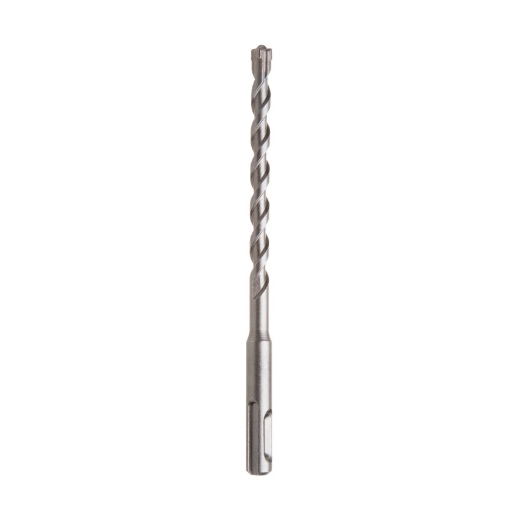
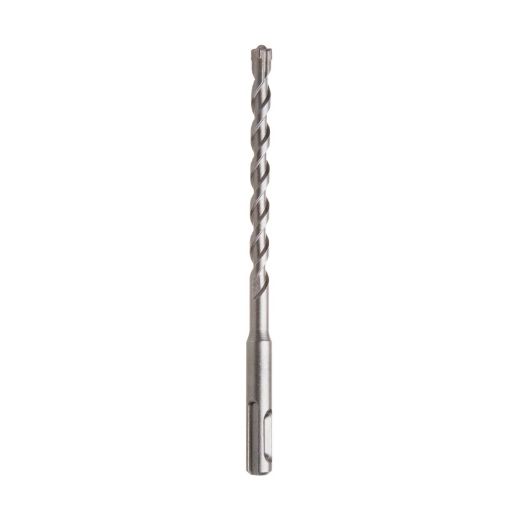
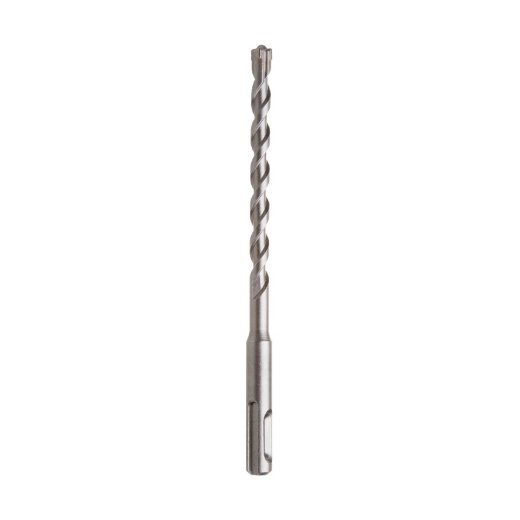
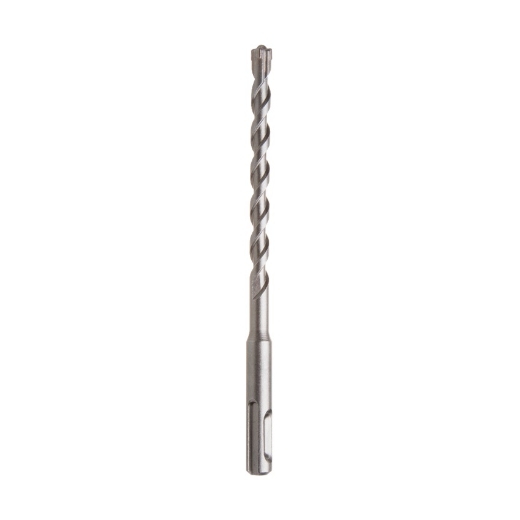
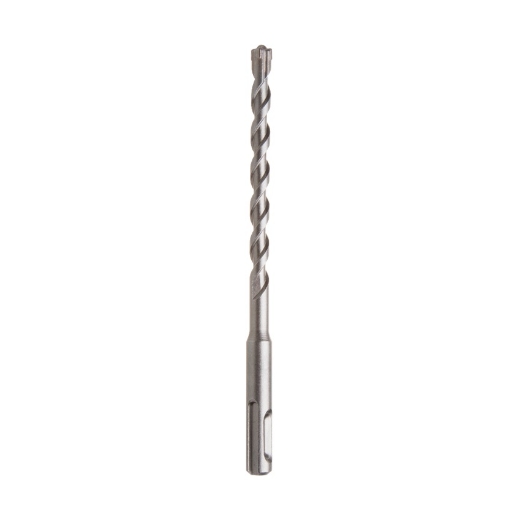
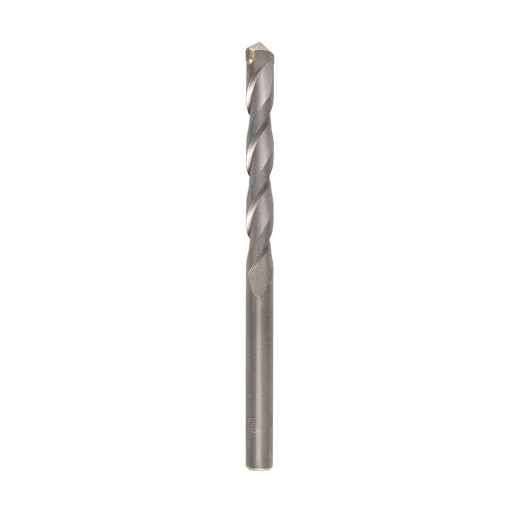
The right masonry drill bit depends on three things: the substrate, the shank type and the diameter. For concrete you need an SDS-Plus bit with a carbide tip, run in a rotary hammer; for brick and calcium silicate a round or straight shank bit in a standard impact drill is usually enough. Diameter ranges on carbide masonry bits typically span from 4.1mm up to 20mm, and for large service holes in brickwork, diamond core bits go well beyond that. Pick the shank for your machine first, then match the diameter to your plug or duct. Get this wrong and the bit slips, glazes over or simply won't grip the material.
Not sure which drill bit fits your wall or floor? Browse the full range in our masonry drill bits category and use this guide to narrow it down before you buy.
- Concrete needs an SDS-Plus carbide bit used with hammer action; a standard drill without SDS will struggle.
- Brick and calcium silicate can often be drilled with a round or straight shank bit in an ordinary impact drill.
- The bit diameter must match the anchor or plug you plan to fit, never the other way round.
- For holes over roughly 100mm (ducts, vents), a dry diamond core bit replaces a standard masonry drill entirely.
- A 4-cutter carbide tip clears debris faster and stays sharper longer than a basic two-edge tip.
Which masonry drill bit fits which job? Compare the range
The table below lines up the masonry drill bits from our own range against their shank type, diameter and the substrate they're built for. Use it to shortlist before checking full specifications on the product page.
| Product | Brand | Connection | Diameter | Ideal for |
|---|---|---|---|---|
| Labor SDS-Plus premium 4-cutter 6x100/160mm | Labor | SDS-Plus | 4.1 - 6mm | Concrete, small anchors |
| Labor SDS-Plus premium 4-cutter 8x150/210mm | Labor | SDS-Plus | 6.1 - 8mm | Concrete, medium anchors |
| Labor SDS-Plus premium 4-cutter 10x250/310mm | Labor | SDS-Plus | 8.1 - 10mm | Deep holes in concrete |
| Labor SDS-Plus premium 4-cutter 12x200/260mm | Labor | SDS-Plus | 10.1 - 15mm | Heavier anchors in concrete |
| Labor SDS-Plus premium 4-cutter 16x390/450mm | Labor | SDS-Plus | 15.1 - 20mm | Long, heavy-duty concrete holes |
| Labor SDS-Plus premium 4-cutter 20x390/450mm | Labor | SDS-Plus | 15.1 - 20mm | Large anchors, heavy fixings |
| Labor betonboor HM 6x100mm | Labor | Round shank, 130° tip | 4.1 - 6mm | Brick, calcium silicate |
| Labor betonboor HM 8x120mm | Labor | Round shank, 130° tip | 6.1 - 8mm | Brick, lightweight blockwork |
| Irwin multi-material bit 6x160mm | Irwin | Straight shank | 4.1 - 6mm | Mixed materials, tiled walls |
| Irwin masonry bit 8x400mm | Irwin | Straight shank | 6.1 - 8mm | Deep holes in masonry walls |
| Carat Brilliant diamond brick bit set 112/132/162mm | Carat | Dry diamond core + centring pin | 112 / 132 / 162mm | Large holes: ducting, vents in brick |
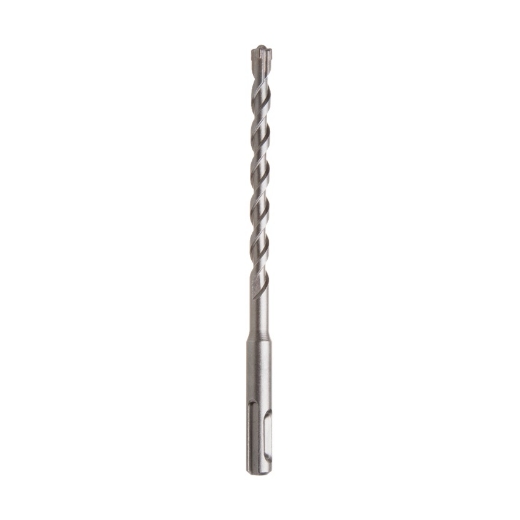
Concrete, everyday size
This SDS-Plus 4-cutter bit is one of our most chosen for standard anchor holes in concrete and covers the common 4.1 to 6mm range.
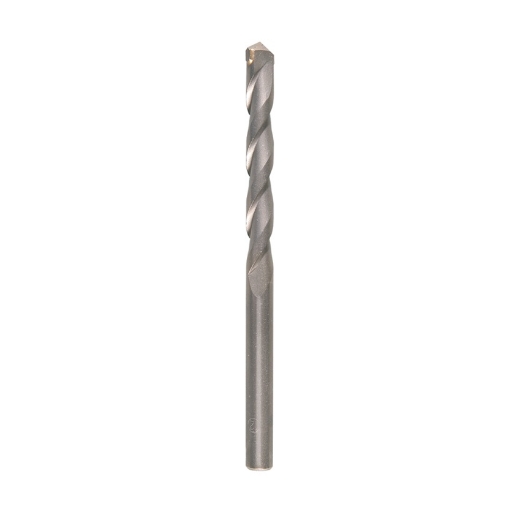
Brick and calcium silicate
No SDS chuck on your drill? A round shank bit with a 130° carbide tip drills brick and lightweight blockwork with a standard impact drill.
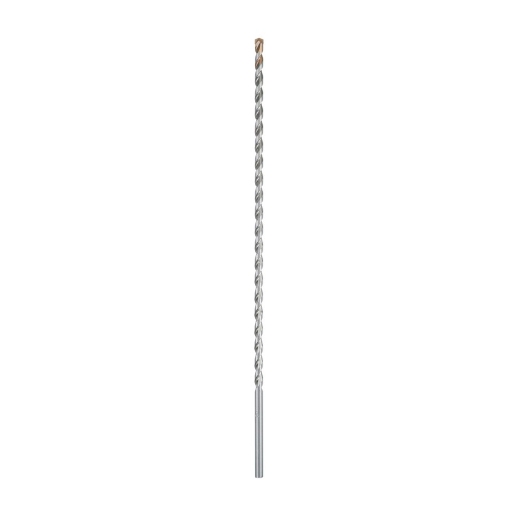
Deep holes in masonry
Fitting a long screw or anchor through a thick wall? This 400mm straight shank bit reaches deep into brickwork without an extension.
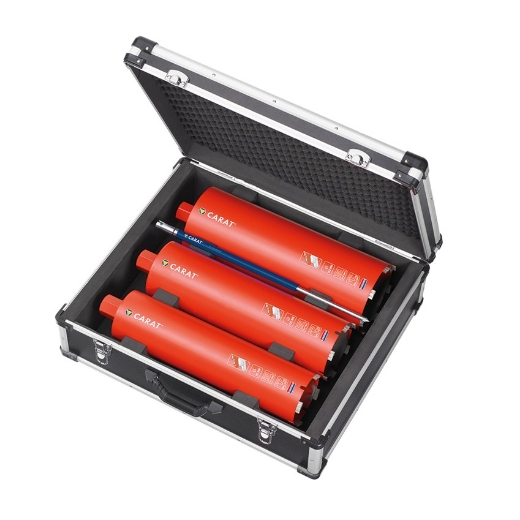
Large service holes
Need a hole for a duct or vent through a brick wall? This dry diamond core set with centring pin covers 112, 132 and 162mm in one box.
SDS-Plus or cylindrical shank: which one do I need?
Choose your shank based on the chuck of your drill, not on the wall. An SDS-Plus bit only fits a rotary hammer with an SDS-Plus chuck; it locks in place and lets the machine deliver full hammer force straight through the shank. A cylindrical (round or straight) shank bit fits any three-jaw chuck, including an ordinary impact drill, but transfers less hammer energy.
In practice this means: reinforced concrete, structural walls and larger diameters call for SDS-Plus, because the connection survives the impact load. Brick, calcium silicate and small fixing holes are lighter work, and a round shank bit such as the Labor HM 6x100mm handles that without needing a rotary hammer at all. Mixing the two up wastes time; a round shank bit in tough concrete will slip and glaze rather than cut.
Concrete, brick or calcium silicate: what changes per substrate?
Concrete is dense and abrasive, so it needs a carbide tip driven by real hammer action; brick and calcium silicate are softer and forgive a lighter approach. A 4-cutter carbide tip, as used on the Labor SDS-Plus premium range, clears dust faster in dense concrete than a basic two-edge tip and stays sharp over more holes. For soft, solid brick or calcium silicate block, the 130° tip on a round shank bit like the Labor HM series already cuts cleanly without needing that extra cutting geometry.
Calcium silicate brick sits between the two in hardness: it drills faster than concrete but is harder than a common red brick, so a round shank bit still works well as long as you let the drill do the work rather than forcing it. Old lime mortar joints, by contrast, drill almost too easily and are best avoided as a starting point; start the hole in the solid brick itself, not the joint, for a stable, straight hole.
Which size masonry drill bit should I use?
The diameter of your masonry drill bit is set by the anchor, plug or fixing you intend to install, never chosen separately. Our SDS-Plus range covers this in clear steps: 4.1 to 6mm, 6.1 to 8mm, 8.1 to 10mm, 10.1 to 15mm and 15.1 to 20mm, so you match the bit to the fixing rather than rounding up. A hole drilled even one millimetre too wide lets the anchor spin freely and lose its grip; too narrow, and the anchor won't seat at all.
For long fixings into thick concrete or deep masonry, check the useful length as well as the diameter. The 10x250/310mm SDS-Plus bit, for example, offers 260mm of usable drilling length, well beyond the reach of a standard 100mm bit, which matters when anchoring heavier brackets or railings.
In our shop in Beerse we tell customers the same thing every time: match the bit diameter to the plug first, then worry about the drill. Get that order right and half the fixing problems disappear on their own. DHZ-Proshop vakteam, Beerse
Which masonry drill bit is best for large holes?
Above roughly 100mm diameter, a standard carbide masonry bit is the wrong tool; a dry diamond core bit takes over. The Carat Brilliant set covers 112, 132 and 162mm diameters with a centring pin included, built specifically for cutting clean, round holes through brick for ducting, extractor vents or pipe passages.
A centring pin matters here because a large-diameter core bit has no point of its own; without the pin it walks across the surface before it can start cutting. Run these core bits dry, at a steady, moderate speed, and withdraw regularly to clear dust from the cut, since a clogged core bit heats up fast and can bind in the hole.
Common mistakes when choosing a masonry drill bit
- Using a round shank bit in a rotary hammer on hard concrete: the chuck won't transmit full hammer force, so the bit glazes over instead of cutting.
- Rounding the diameter up "to be safe": an oversized hole lets the plug or anchor spin and lose all holding strength.
- Skipping the centring pin on large core bits: without it, the bit skates across the brick surface and never starts a true, round hole.
- Ignoring useful length on deep holes: a 100mm bit simply won't reach through a thick wall, no matter how hard you push.
Browse the complete range in our masonry drill bits category to compare every diameter and shank side by side.
Frequently asked questions about masonry drill bits
Which masonry drill bit is best for concrete?
What are masonry drill bits and how do they differ from other bits?
Which size masonry drill bit should I use?
Why is the tip of a masonry drill bit a different colour?
What is a concrete drill bit and how do I recognise one?
SDS-Plus or cylindrical shank: which one do I need?
Compiled by the trade team of DHZ-Proshop, your DIY and trade supplier with a shop and collection point in Beerse. What we advise most often at the counter: check your drill's chuck first, then pick the diameter to match your anchor, not the other way round. Questions about the right masonry drill bit for your job? Contact our team or browse the full masonry drill bits range.