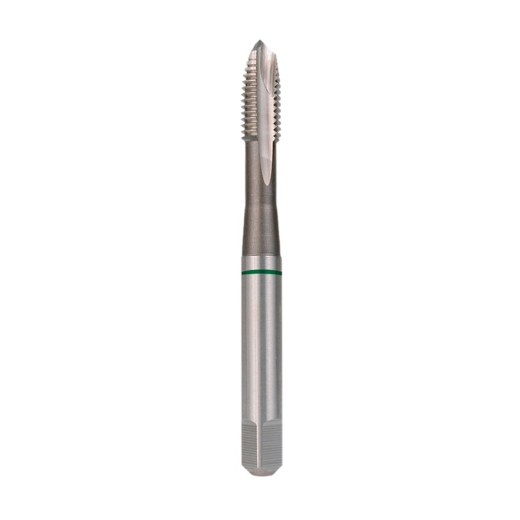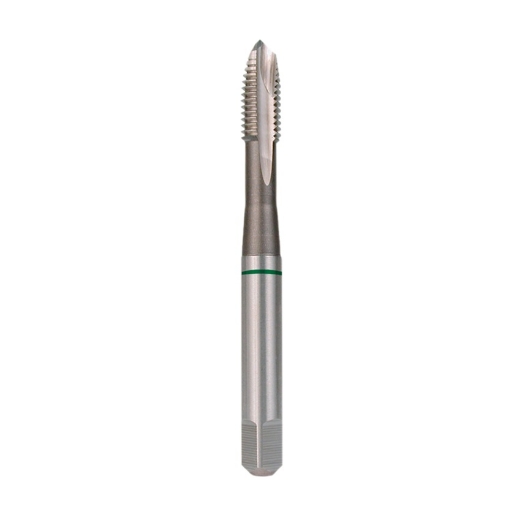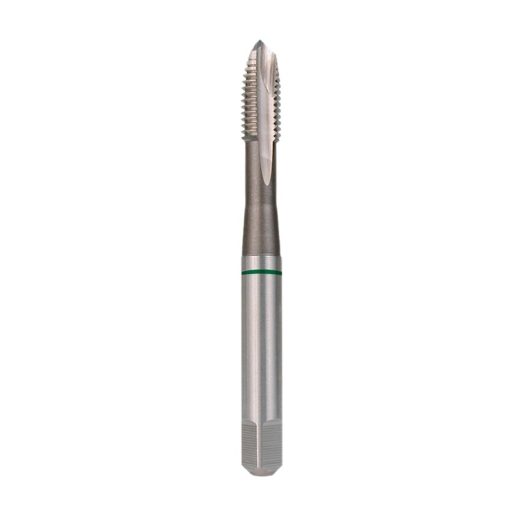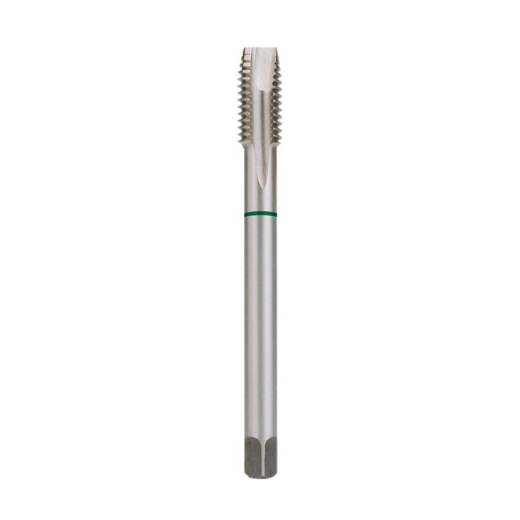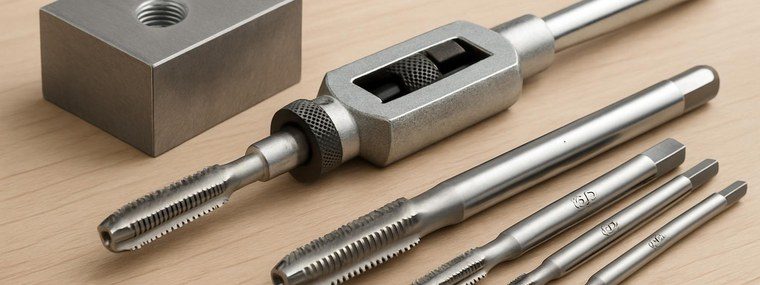
For a one-off repair by hand, pick a three-piece hand tap set (DIN 352); for repeat work with a drill or pillar drill, pick a machine tap that cuts the thread to size in a single pass. The pilot hole decides the result: an M6 thread is drilled at 5.0 mm, an M8 at 6.8 mm. For through holes, use a machine tap with a spiral point (DIN 371B); for blind holes, a version with a short chamfer lead (DIN 371C). If you regularly cut threads in stainless steel, HSS-Co with 5% cobalt is the right choice.
Which tap suits your job and material? Browse the full range in our threading taps category.
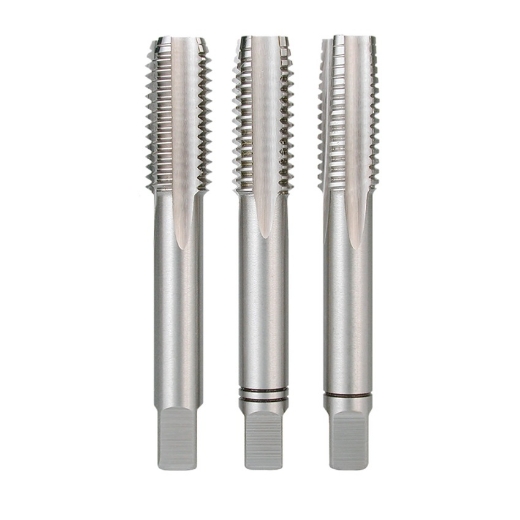
- Hand tap (DIN 352) for repairs and assembly with a tap wrench, machine tap for the drill or pillar drill.
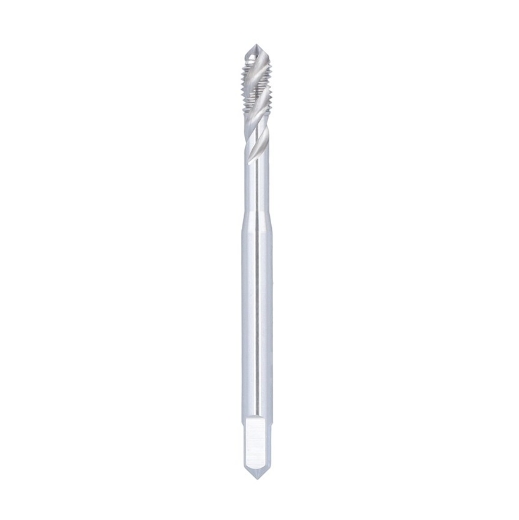
- DIN 371B with a spiral point is for through holes, DIN 371C with a short lead for blind holes.
- The tapping drill size is sacred: M5 = 4.2 mm, M6 = 5.0 mm, M8 = 6.8 mm, M10 = 8.5 mm, M12 = 10.2 mm.
- HSS-G is fine for steel, HSS-Co 5% is the pick for stainless and higher tensile grades.
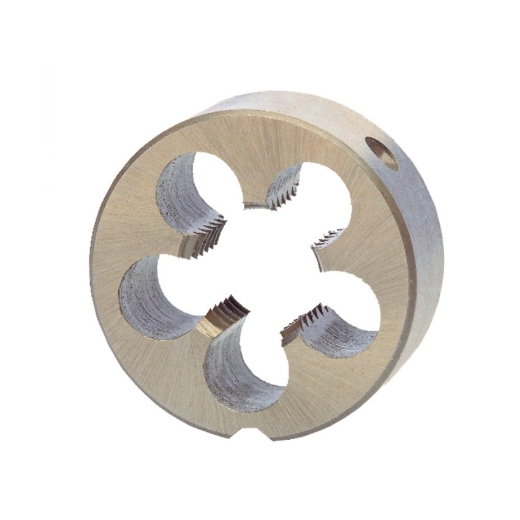
- External thread is not cut with a tap but with a die held in a die stock.
Which tap for which job?
The table below puts the most chosen taps from our range side by side, from the single machine tap to the complete case with matching drills.
| Product | Type and standard | Key spec | Ideal for |
|---|---|---|---|
| Labor machine tap M5 DIN 371B | Machine tap, DIN 371B | HSS-Co 5%, usable length 13 mm | Through holes in steel and stainless |
| Labor machine tap M6 DIN 371B | Machine tap, DIN 371B | HSS-Co 5%, usable length 15 mm | The most used size in machine building |
| Labor machine tap M6 DIN 371C (blind) | Machine tap, DIN 371C | Short lead, usable length 10 mm | Blind (non-through) holes |
| Labor machine tap M12 DIN 376B | Machine tap, DIN 376B | HSS-Co 5%, usable length 23 mm | Large sizes from M12 up |
| Labor hand tap set M6 DIN 352 | Hand tap, DIN 352, 3-piece | Ground HSS-G: taper, second and bottoming tap | Repairs and assembly with a tap wrench |
| Labor machine tap set 14-piece M3-M12 | Set, DIN 371/376 | HSS-Co taps with matching HSS-Co drills | Workshops that want every size covered |
A stripped thread in steel is restored with a three-piece hand tap set and a tap wrench.
With a DIN 371B machine tap you cut through holes in a single pass, in stainless too.
The 14-piece set pairs taps M3 to M12 with the correct pilot drills, so a wrong drill size is off the table.
When do you choose a hand tap and when a machine tap?
You choose a hand tap for occasional repair work with a tap wrench, and a machine tap for powered threading with a drill, pillar drill or tapping machine. The three-piece hand tap set (DIN 352) works in stages: the taper tap starts the cut, the second tap deepens the profile and the bottoming tap calibrates the thread. That spreads the cutting force and keeps the tap straight, exactly what you want when working freehand.
The machine tap does the same work in one pass. The spiral point of a DIN 371B pushes the chip ahead of the tap, so that version is meant for through holes. In a blind hole the chip cannot escape at the bottom: there you pick a DIN 371C with a short lead, which cuts full thread after two to three turns and gets closer to the bottom.
For driving by hand, use a ratchet tap wrench: it lets you cut in tight corners without removing the tool after every turn.
Which drill size belongs to which metric thread?
The tapping drill size equals the core diameter of the thread: drill too small and the tap jams and snaps, drill too big and the thread carries too little load. For standard metric coarse thread, use these values: M3 = 2.5 mm, M4 = 3.3 mm, M5 = 4.2 mm, M6 = 5.0 mm, M8 = 6.8 mm, M10 = 8.5 mm and M12 = 10.2 mm. Pin this list next to the pillar drill; it prevents the most common cause of tap breakage.
Lubrication is part of the job. Use cutting oil in steel and stainless; cast iron is tapped dry. When tapping by hand, back off a quarter turn after every full turn to break the chip.
HSS-G or HSS-Co: which tap material do you need?
HSS-G (ground high-speed steel) is the standard for mild steel, brass and aluminium. HSS-Co contains 5% cobalt and keeps its hardness at higher cutting temperatures: that makes it the right choice for stainless steel and higher tensile grades. Our Labor machine taps in HSS-Co 5% run from M3 to M18, always with the DIN standard in the product name so you can tell through (B) and blind (C) apart.
In our shop in Beerse we always point stainless jobs to the HSS-Co machine taps; anyone restoring a single damaged thread in ordinary steel is perfectly served by an HSS-G hand tap set and a little cutting oil.DHZ-Proshop expert team, Beerse
The standard also tells you about the shank: DIN 371 has a reinforced shank and runs up to M10, DIN 376 has a through shank for the larger sizes from M12, such as the machine tap M12 DIN 376B with a usable length of 23 mm.
Common mistakes when tapping threads
- Wrong drill size: pre-drilling an M8 at 7.5 mm instead of 6.8 mm gives a thread that strips under load.
- Through-hole tap in a blind hole: the spiral point pushes the chip to the bottom, where it jams and snaps the tap. Take a C version.
- Tapping stainless dry: without cutting oil, stainless galls and the tap seizes in the material.
- Starting at an angle: a tap that is not square cuts an oval thread. Use the pillar drill or a tapping guide to start square.
Frequently asked questions about taps
What is the difference between a hand tap and a machine tap?
Which drill size do I use for M6 and M8?
What do DIN 371B and DIN 371C mean?
Which tap do I use for a blind hole?
When do I need HSS-Co instead of HSS-G?
How do I cut external thread on a rod or bolt?
Need advice on your choice?
Compiled by the expert team of DHZ-Proshop, your DIY and trade supplier with a shop and pickup point in Beerse. What we advise most in the shop: buy the tap and the pilot drill together, then the sizing is always right. Torn between two versions? Get in touch or browse the full range of threading taps.