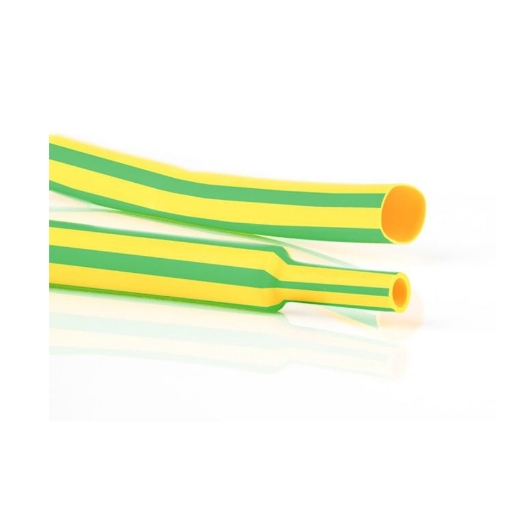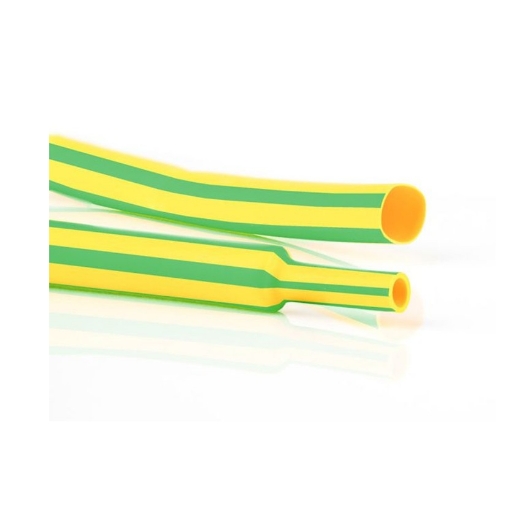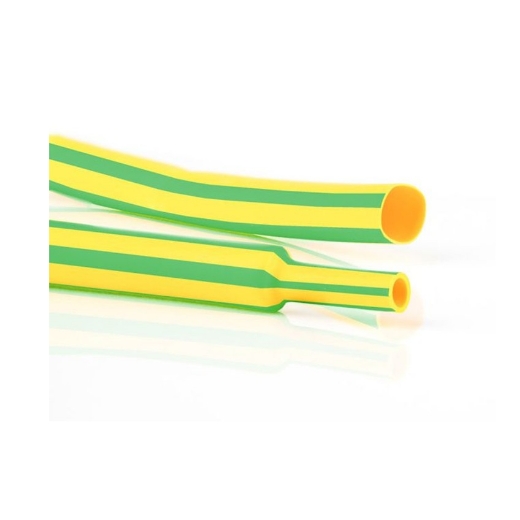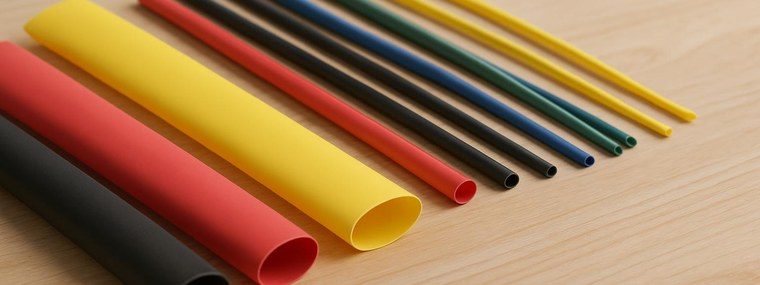
A heat shrink sleeve that stays loose or won't seal is almost never a bad product, it is the wrong diameter or the wrong shrink ratio for the job. The rule is simple: the tube's expanded inner diameter must slide over the connector or joint, and its recovered (shrunk) diameter must be smaller than the cable so it grips tight. A 2:1 ratio tube halves its diameter when heated, while a 3:1 ratio tube, such as the 3.2-1mm mil-spec version in our range, shrinks down to roughly a third of its starting size. Get that ratio wrong and the sleeve either won't fit over the connector or never tightens onto the cable. Add halogen-free or adhesive-lined tubing when the joint needs extra safety or a watertight seal.
Which heat shrink tubing fits your cable? Browse the full range in our heat shrink tubing category and match diameter, ratio and colour to the job below.
- Choose the tube's expanded diameter so it slides over the connector, and its recovered diameter so it grips the bare cable tightly.
- A 2:1 ratio halves in size on heating; a 3:1 ratio shrinks to roughly a third, giving a tighter fit over irregular multi-core ends and connectors.
- Mil-spec 135°C thin-wall tubing insulates and colour-codes cables but is not adhesive-lined, so it will not seal out water on its own.
- Halogen-free tubing is the safer choice in enclosed spaces or vehicles because it does not release toxic gas when it burns.
- Always heat evenly from the middle outward with a heat gun; a lighter flame scorches thin-wall tubing instead of shrinking it.
Which heat shrink tubing matches which cable diameter?
Match the tube to the bare cable or joint diameter first, then check the shrink ratio fits your connector. The table below lists the thin-wall heat shrink tubing available at DHZ-Proshop, with the real shrink diameter range of each.
| Product | Ratio | Shrink Ø range | Ideal for |
|---|---|---|---|
| 10m tubing, 3:1, Ø 1.5-0.5mm | 3:1 | 1.5mm to 0.5mm | Thin signal wires, sensor leads, fine strands |
| 10m tubing, 3:1, Ø 3.2-1mm | 3:1 | 3.2mm to 1mm | Small connectors, soldered joints, stranded wire |
| 1m tubing, 2:1, Ø 9.5-4.8mm | 2:1 | 9.5mm to 4.8mm | General cable joints, standard automotive and household wiring |
| 1m tubing, 2:1, Ø 12.7-6.4mm | 2:1 | 12.7mm to 6.4mm | Thicker cable bundles, multi-core cable |
| 1m tubing, 2:1, Ø 50.8-25.4mm | 2:1 | 50.8mm to 25.4mm | Large cable trunks, motor leads, junction sleeves |
| 75m roll, 2:1 halogen-free, Ø 16-8mm | 2:1 | 16mm to 8mm | Bulk cable bundling in enclosed spaces, panels, vehicles |

Standard cable joint
Repairing a household or automotive joint? The 9.5-4.8mm, 2:1 tube is one of our most chosen sizes for everyday connectors and splices.
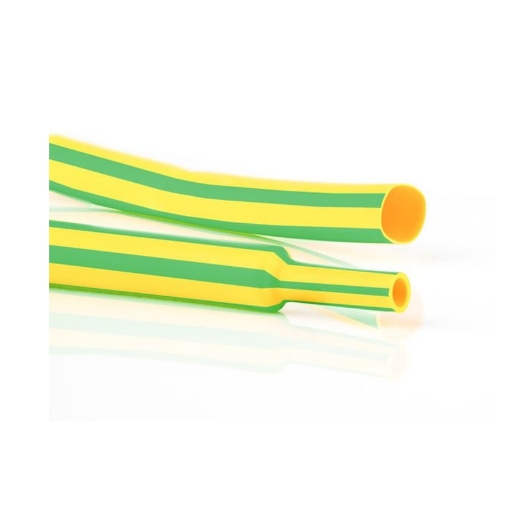
Fine signal wire
Sensor leads and thin strands need a tighter grip. The 1.5-0.5mm, 3:1 tube shrinks to roughly a third of its size for a snug finish.
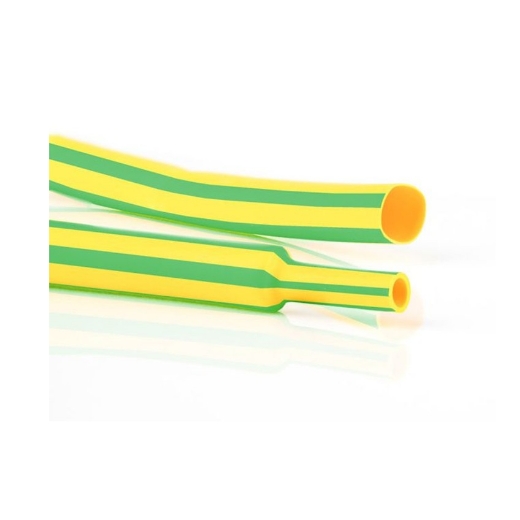
Heavy cable trunk
Motor leads and large junctions need room to spare. The 50.8-25.4mm, 2:1 tube covers thick cable and splice kits without stretching thin.
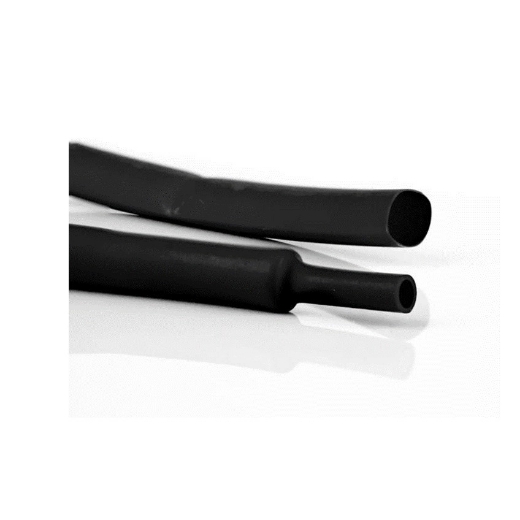
Bulk enclosed-space wiring
Working inside a panel or vehicle loom? The 75m halogen-free roll bundles multiple runs and does not release toxic gas if it ever burns.
How do I match heat shrink tubing to my cable diameter?
Measure the widest part of the joint first, not the bare cable. The tube's expanded (unshrunk) diameter must be large enough to slide freely over the connector, solder joint or bundled wires. Once heated, the tube needs to recover down past the diameter of the cable itself, or it will stay loose and spin around the joint instead of gripping it.
Cutting a tube too tight causes a different problem: it jams on the connector before you can position it, or splits along the seam under stress while sliding it into place. As a working rule, pick a tube whose expanded diameter is around 20 to 30 percent wider than the joint you are covering, then let the shrink ratio pull it down tight once heated.
What does a heat shrink ratio actually mean?
The shrink ratio describes how far a tube's diameter reduces between its expanded and fully recovered state. A 2:1 ratio means the tube shrinks to half its original diameter, so a tube expanded to 9.5mm recovers to about 4.8mm, exactly as listed for our standard mil-spec tubing. A 3:1 ratio goes further: the 3.2-1mm tube in our range shrinks down to roughly a third of its starting size, which is why higher ratios grip irregular shapes such as bare stripped ends, multi-pin connectors or bundled strands far better than a 2:1 tube ever could.
There is no single "highest" ratio across the whole market, but within thin-wall mil-spec tubing 3:1 is the strongest reduction commonly used for cable work; anything higher tends to belong to specialist moulded boots rather than straight sleeves. For most repairs, 2:1 covers a standard round cable joint, while 3:1 is the better pick whenever the joint shape is uneven or you need to cover a connector body and a thinner cable with the same sleeve.
Do I need adhesive-lined heat shrink for a waterproof seal?
Yes, if the joint sits outdoors, underground or anywhere near moisture, choose adhesive-lined (dual-wall) heat shrink instead of plain thin-wall tubing. The mil-spec 135°C thin-wall tubing in our range insulates the conductor, colour-codes the circuit and bundles cables reliably, but it is not adhesive-lined, so it will not stop water from creeping in along the ends of the sleeve.
For a purely mechanical or indoor joint, non-adhesive thin-wall tubing is the right and simpler choice: it shrinks faster, stays flexible and is easier to slide over a connector. Reserve adhesive-lined tubing for the specific joints that face rain, road spray, washdown or buried cable runs, since the glue lining needs a slightly longer, hotter shrink cycle to melt and seal properly.
In our shop in Beerse we see the same mistake almost every week: someone uses thin-wall tubing on an outdoor joint and wonders why it lets in moisture months later. Thin-wall tubing insulates and colour-codes beautifully, it was just never meant to seal out water on its own.DHZ-Proshop trade team, Beerse
Common mistakes with heat shrink tubing
- Choosing the recovered diameter instead of the expanded one: a sleeve that recovers to the right size but starts too narrow will never slide over the connector in the first place.
- Using a lighter or match instead of a heat gun: an open flame scorches or blackens thin-wall tubing before it shrinks evenly, weakening the seam.
- Expecting non-adhesive tubing to waterproof a joint: plain thin-wall tubing insulates and bundles, it does not seal against moisture without an adhesive lining.
- Picking 2:1 for an irregular connector shape: a 3:1 ratio recovers much further and grips uneven joints, stripped ends and multi-pin connectors far more securely.
Frequently asked questions about heat shrink ratio and sizing
What does heat shrink tubing ratio mean?
How do I calculate the right heat shrink ratio for my cable?
What is the difference between a 2:1 and 3:1 heat shrink ratio?
Is PVC heat shrink tubing's shrink ratio different from polyolefin?
What is the highest heat shrink ratio available for cable work?
Which heat shrink ratio is best for a cable joint?
Compiled by the trade team of DHZ-Proshop, your DIY and trade supplier with a shop and pickup point in Beerse. What we advise most often in the shop is to measure the joint before the cable, and only then pick the ratio. Questions about which heat shrink tubing fits your repair? Contact our team or browse the full heat shrink tubing range.