Which Blind Rivet Won't Rust Outdoors? (316 Stainless, A2 Stainless, Aluminium or Coated Steel)
No blind rivet is truly rust-proof everywhere and forever, but for outdoor projects 316 stainless steel (A4) is the strongest choice against rust, followed by A2/304 stainless for general outdoor use. Aluminium and coated steel are options for lighter or less demanding jobs. The right answer depends on how wet, salty and exposed the joint is, because blind rivets face the same corrosion risk as any other outdoor fastener.
Which blind rivet won't rust on your outdoor project? Blind rivets are used when you can only reach one side of the workpiece, which makes them ideal for sheet metal, metal-to-metal joints, gutters and cladding. Because they often sit in places that are hard to inspect later, corrosion resistance matters more than people expect. In this guide you start with the environment and then decide which rivet suits your job.
Overview: which blind rivet for which environment?
Browse the full range in our webshop. For sheet metal, metal-to-metal joints and outdoor repairs, the rivet material decides whether you get rust after a few years or not. The table below shows at a glance which rivet matches which exposure.
| Blind rivet type | Suitable for | Key feature | When to choose |
|---|---|---|---|
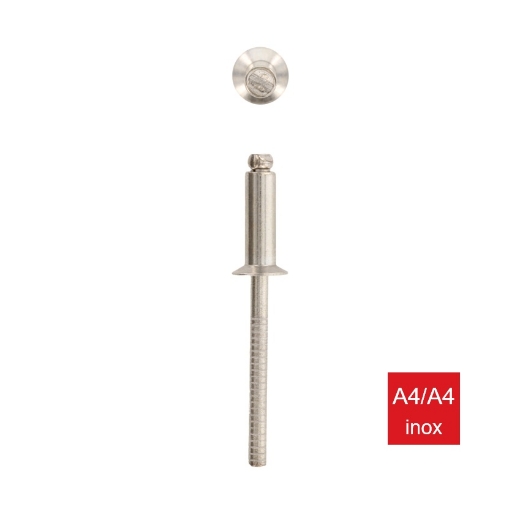
| 316 stainless (A4) | Coast, pool, aggressive environment | Best resistance to chlorides and salt | When rust is most costly or most visible |
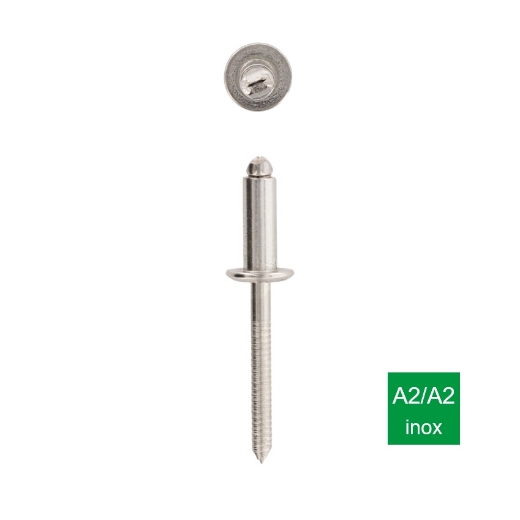
| A2/304 stainless | General outdoor work inland | Good corrosion resistance, lower price than 316 | Garden structures, sheet metal, general outdoor work |
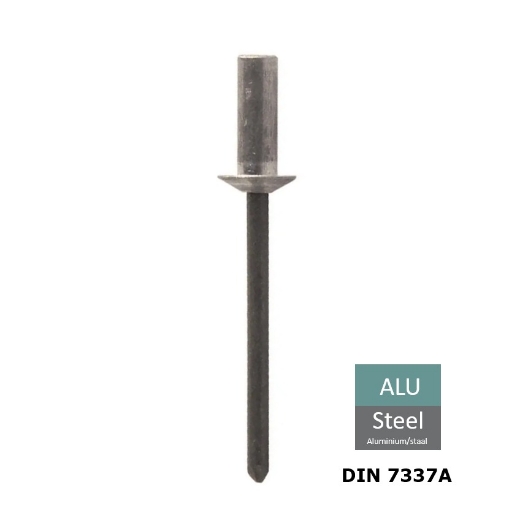
| Aluminium | Light work, weight-sensitive jobs | Light, naturally corrosion resistant, lower strength | Panels, trims, mild environment |
| Galvanized or coated steel | Moderate exposure, budget | Strong, but coating wears off over time | Sheltered or hidden spots, lower demands |
Always start with the environment
The first thing to judge is the level of exposure. A covered garden structure, a rain-exposed shed panel and a metal assembly at the coast are all outdoor, but they do not need the same corrosion protection. If the rivet sits in a dry or sheltered exterior zone, a good stainless or coated rivet may be enough. If it faces frequent rain, standing moisture or condensation, stainless becomes much more attractive. If the project is near the sea, on a boat, around salt spray or in another chloride-rich environment, 316 stainless is usually the strongest choice, because that is where rust shows up fastest.
Coastal or aggressive environment
At the coast, on a boat, around chlorine or salt, choose 316 stainless (A4). It is the strongest choice against rust and the closest thing to a rivet that won't rust outdoors.
General outdoor work inland
For garden structures, sheet metal and general outdoor work, A2/304 stainless is usually enough. Good corrosion resistance against rain and moisture, without the higher price of 316.
Moisture or water spray
Where water can enter the hole, a closed-end rivet helps seal the hole better. In stainless, you then combine corrosion and moisture protection in one.
Light work or budget
For light or weight-sensitive work in mild conditions, aluminium or coated steel can be enough. Watch the lower strength and the limited lifespan of a coating.
316 and A2 stainless: the rust-resistant choices
If rust is the main concern, stainless is the safest route, because it resists corrosion without depending entirely on a surface coating. 316 stainless (A4) is the top choice for corrosion resistance outdoors: it is often preferred for marine, coastal and chemically aggressive environments because, thanks to added molybdenum, it resists chlorides better than standard stainless. That makes it ideal for cladding, boats, gutters and spots where replacement is difficult later. The trade-off is cost: 316 stainless is more expensive, but it pays back when failure would be costly or visible.
A2 (304) stainless is the practical default choice for outdoors. It performs well in normal weather exposure and is therefore widely used for garden structures, sheet metal and many DIY projects that see rain but not heavy salt exposure. The limitation is aggressive environments: in salt air or chemically active locations, A2 is outperformed by 316.
Aluminium and coated steel
Aluminium rivets are light and naturally corrosion resistant in many situations. They are easy to install and are often used where weight matters or where the base material is also non-ferrous. For outdoors, they work well in mild environments, especially in light sheet work, panels and trims. The limitation is strength: aluminium is not always the best choice for heavy-duty outdoor joints or spots with a lot of movement, load or vibration, there, stainless is often safer.
Steel rivets can be strong, but bare steel is not a good outdoor choice. They are often protected with zinc or another coating, but that coating can wear or be damaged over time. Coated steel is therefore fine in moderate conditions or hidden spots, but less reliable than stainless under harsh outdoor exposure. If long-term durability is the goal, steel with a thin coating is usually not as safe as stainless.
Open or closed-end: the design matters too
The material matters most, but the rivet type matters too. Closed-end blind rivets (sealed) have a closed, cup-shaped end and are useful when moisture or leakage is a concern, because they help seal the hole better than open-end versions. Note that a closed-end rivet is not automatically watertight or rust-proof. The design helps keep water out of the joint, which reduces the chance of corrosion starting inside the hole, but for a fully watertight seal an extra sealing washer is often needed.
Open-end blind rivets are the most common version, simple and versatile. However, they do not seal as well, so water can enter the hole and sit in the joint, which raises the corrosion risk. If the rivet sits where moisture can collect, the open design becomes a weak point.
Galvanic corrosion and the role of the mandrel
Rust resistance is not only about the rivet material. If you combine different metals, galvanic corrosion can make the faster-deteriorating metal fail sooner. A stainless rivet in aluminium, or a coated steel rivet in contact with another reactive metal, can cause problems if moisture is present.
There is one detail many people overlook: the mandrel (the pull stem). Many aluminium rivets have a steel mandrel. The piece of mandrel that remains in the rivet can still corrode at the coast, even if the body is aluminium. If you want real outdoor or coastal durability, choose a version where both the body and the mandrel are stainless.
Size and grip range still matter
A rust-resistant rivet is still the wrong rivet if the size is off. Blind rivets must match the grip range, the diameter and the material thickness of the joint. Too short or too long makes the set joint weak, distorted or prone to failure, and that gives extra movement which accelerates wear and corrosion. Rust resistance and fit go together: a correctly sized A2 or 316 rivet is far more reliable than a poorly sized "better" rivet.
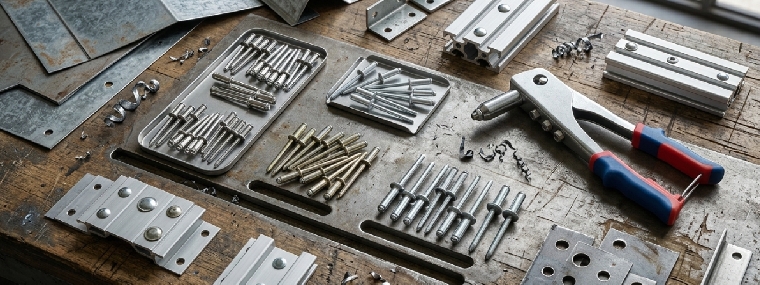
Install your blind rivets with a blind rivet tool that suits the diameter and the material. A rust-resistant rivet that cannot be installed correctly is still a bad buy.
Common mistakes with blind rivets
- Material and quality: choosing on strength only gives a rivet that rusts early, outdoors that is still a poor choice. And don't assume all stainless is the same: A2 and 316 behave differently in harsh conditions, so if salt or moisture is aggressive, 316 is the safer option.
- Sealing and design: if water gets into the hole, corrosion can start even with a relatively resistant rivet, material, design and installation work together. In a wet spot, a closed-end version seals better than an open one.
- What it says on the package: if it says stainless, verify whether it is A2 or A4/316; for galvanized or coated steel the protection is good but not permanent in harsh conditions. Also check whether the rivet is open or closed-end.
Fast decision logic
- Coast, sea or heavy salt: choose 316 stainless.
- General outdoor work with normal weather: choose A2/304 stainless.
- Mild exterior use where price matters: galvanized or coated steel may be acceptable.
- Light and weight-sensitive work: aluminium can be a good option.
Match the rivet to the harshest thing it will face, not the best day of the year. Browse the full selection via our blind rivet category or start at the DHZ-Proshop webshop.
Frequently asked questions about outdoor blind rivets
Which blind rivet rusts the slowest outdoors?
What is the difference between 316 stainless and A2 stainless?
Are aluminium blind rivets suitable for outdoors?
What is the difference between open and closed-end blind rivets?
Are closed-end blind rivets fully watertight?
What is galvanic corrosion with blind rivets?
Why does the mandrel matter for rust?
How do I choose the right grip range?
Which blind rivet do I choose for sheet metal at the coast?
What should I check on the package of blind rivets?
Posted by the fastening expert at DHZ-Proshop, your specialist in blind rivets, blind rivet tools, 316 stainless, A2 stainless and aluminium fasteners. Webshop available 24/7 and pick-up point in Beerse. Questions about the right blind rivet for your project? Contact our team or browse our complete range of fasteners.