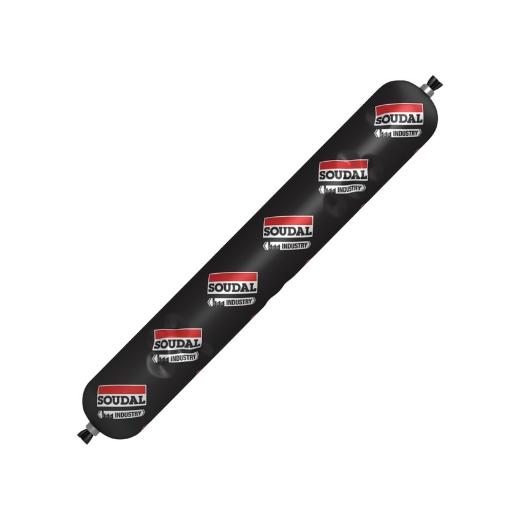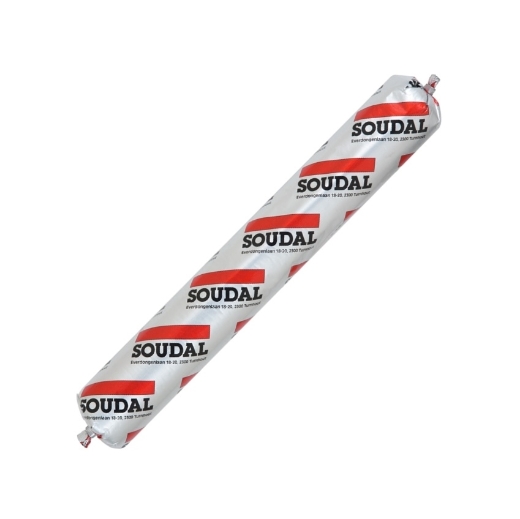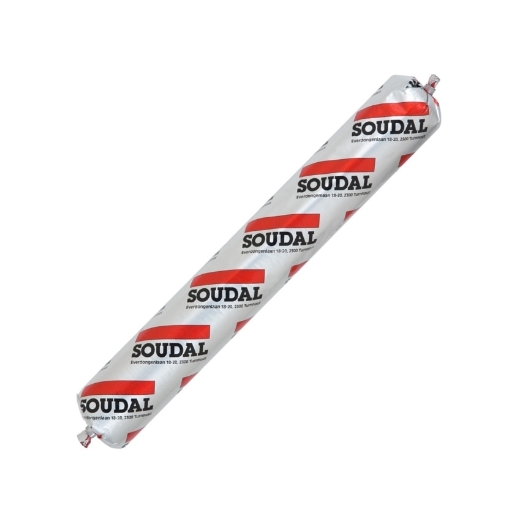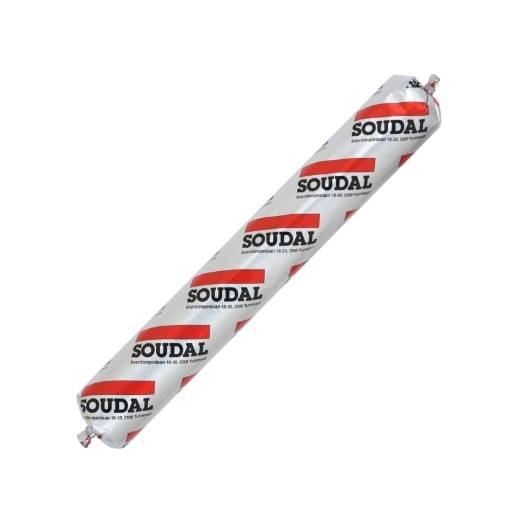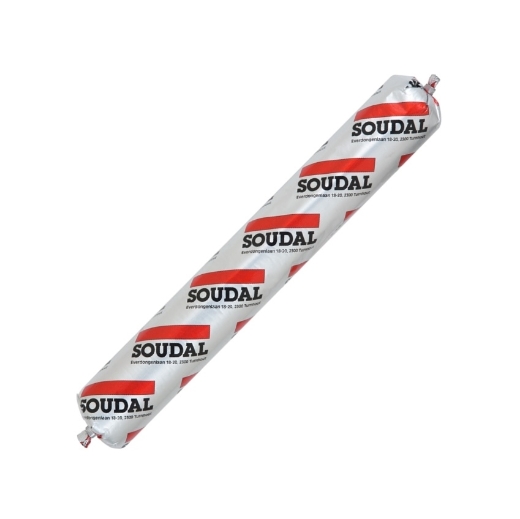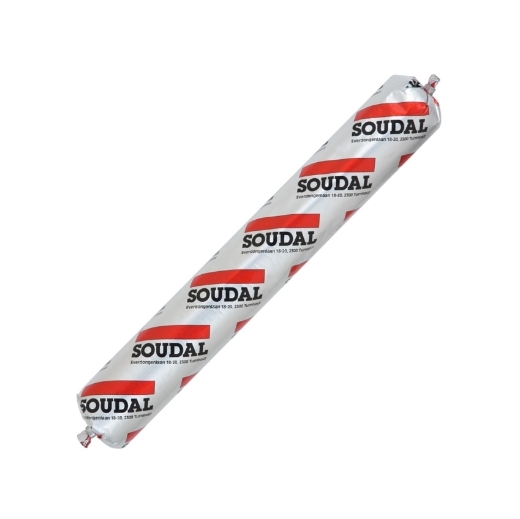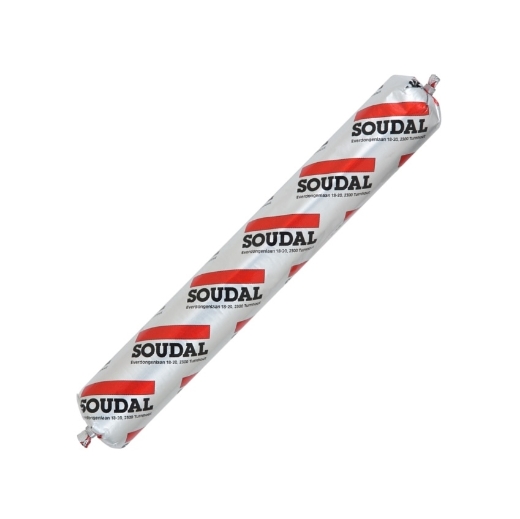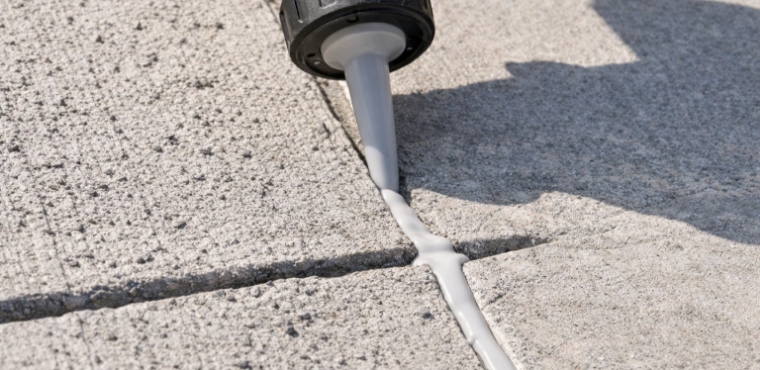
Soudaflex 622 and Soudaflex JGS: two PU sealants for structural building joints. In industrial building joints, ordinary silicone or hybrid sealants are not enough. Precast concrete elements move by centimetres with temperature changes, steel structures vibrate under dynamic loading, and concrete–steel connections experience enormous stress differences during expansion. Soudaflex 622 and JGS are both polyurethane sealants for this kind of application, but they are not interchangeable. 622 combines structural bonding with sealing and provides maximum adhesion to steel, concrete and aluminium. JGS is the elastic choice for joints that must absorb large thermal movement without cracking. Below you can quickly choose which one you need and read how to build up structural building joints correctly.
Soudaflex 622 or JGS, which sealant do you choose for which structural joint?
View the full PU sealant range: Soudal sealants. For the overview of low vs. high modulus and when to use PU sealant vs. hybrid SMX: PU sealant comparison.
Soudaflex 622, structural bonding and sealing on steel & concrete
Soudaflex 622 is a high-modulus PU sealant that combines two functions: it bonds structurally like an adhesive and seals like a sealant. This makes it suitable for structures where mechanical connection and sealing are needed at the same time, and where you do not want to apply a separate adhesive alongside a sealant. Typical applications: connecting joints between steel load-bearing structures and concrete walls, connections between steel beams and concrete floors, cavity ties with backer cord, and sealing of penetrations in industrial walls. The high modulus means the cured sealant is rigid and can absorb tensile forces, but this makes it unsuitable for joints that must absorb large thermal movement (that stress build-up pulls the joint apart). Ventilate well during processing: PU sealant contains isocyanates. More: PU sealants.
Soudaflex JGS, elastic expansion joints in precast & façade panels
Soudaflex JGS is an elastic PU sealant for joints that must absorb large movement. JGS stands for "Joint Glazing Sealant", a designation referring to elastic properties comparable to glazing-grade sealants, but in a PU version for building joints. The typical application is sealing expansion joints in precast concrete elements and façade panels: a 3-metre precast façade panel moves several millimetres with a temperature difference of 50°C, a rigid sealant builds up stress until it cracks or comes loose. JGS follows that movement elastically. It is also suitable for steel or aluminium façade panels, roof-to-façade connecting joints and horizontal movement joints in concrete structures. Difference with Soudaseal 215LM+/222LM: JGS is PU (higher wear resistance, paintable), Soudaseal is hybrid SMX (isocyanate-free, EC1 PLUS). More: Soudaseal 215LM+ & 222LM.
Concrete–steel connections, why standard sealant fails here
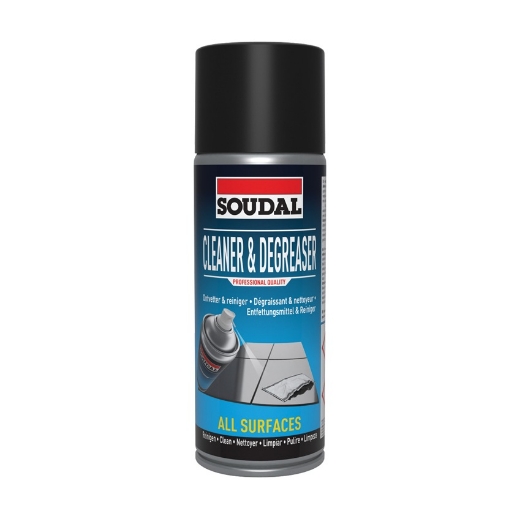
Joints between concrete and steel are technically the most demanding category: both materials have a strongly differing coefficient of expansion. With a temperature rise, steel expands almost twice as fast as concrete. With a temperature difference of 40°C over a 1-metre connection, that already means a relative movement of several tenths of a millimetre, with longer structures this rises to millimetres. An ordinary silicone sealant does not adhere sufficiently to steel here (plasticisers migrate to the steel surface and break down the adhesion). A hybrid sealant can absorb the tensile forces but sometimes lacks the wear and chemical resistance for industrial environments. Soudaflex 622 is for concrete-steel connections where structural adhesion is also needed. Soudaflex JGS is the choice when the joint must purely absorb thermal movement without structural stress transfer. Always clean and degrease with Cleaner & Degreaser before applying.
Joint design and processing, executing structural PU joints correctly
With structural PU sealants, the preparation is more critical than with ordinary finishing joints. An incorrectly prepared substrate or a faulty joint build-up leads to adhesion loss at precisely the moment the joint is loaded. These are the essential steps and points of attention.
- Substrate preparation: the 80/20 principle applies here too, and is even stricter here: With structural joints, everything stands or falls on the quality of the bonding surfaces. Concrete must be free of cement laitance, release agents, dust and carbonation powders. Steel must be cleared of rust, grease, lubricating oil and oxidation layers, use sandpaper or wire brushing followed by degreasing. Aluminium has a passivating oxide layer that can reduce adhesion: mechanical roughening with sandpaper (grit 80–120) followed by degreasing is standard. Always clean with Soudal Cleaner & Degreaser as the final step. Let the degreaser fully evaporate before applying the sealant, degreaser residue on the surface leaves a greasy film that undermines adhesion.
- Primer: when mandatory, when optional: With porous or strongly absorbent concrete, a concrete primer is recommended, the primer seals the porosity and provides a stable bonding layer. With steel showing mild oxidation or under questionable adhesion conditions (high humidity, low temperature), a metal primer is useful. With pre-treated aluminium (anodised, lacquered) always carry out an adhesion test and consult the Soudal technical data sheet for primer selection. Never skip primer on critical structures where the joint adhesion also has a structural function.
- PE backer rod and joint geometry, mandatory with structural joints too: Even with structural PU joints, you use a PE backer rod for joint depths above 10mm. Three-sided adhesion (to both side walls and the joint base) is destructive even with high-modulus sealants: the stress concentrates in the sealant during movement and tears the joint open. PE profile does not adhere to PU sealant and mechanically closes off the joint base. Choose a closed-cell PE profile, diameter approximately 25% larger than the joint width. With Soudaflex 622 for structural connections without backer rod (shallow joint, purely bonding): the sealant may then adhere over the full depth, but this is a different application than sealing. More: difference in joint fillers.
- Joint width and depth ratio for structural joints: The standard ratio width:depth = 2:1 also applies to structural PU joints. With Soudaflex JGS in façade panels: joint width typically 15–25mm, sealant depth 8–12mm. With sealant that is too deep, the high elastic stress builds up more resistance than necessary, the sealant then moves less smoothly and cancels out the elasticity gain. With a joint that is too narrow, the sealant has too little reservoir to absorb the movement. Calculate the joint width correctly based on the thermal expansion of the structural part: consult the technical data sheet or specification. More: the correct joint width.
- Isocyanates and ventilation, safety requirement when processing PU: Soudaflex 622 and JGS are PU sealants based on isocyanates. When processing in enclosed spaces (warehouses, tunnels, underground car parks), good ventilation is mandatory, not as a recommendation, but as a safety requirement. Wear gloves and ensure a flow of fresh air. Isocyanates can cause respiratory complaints when inhaled. After full curing, the sealants are inert and no longer dangerous, the risk lies in the processing phase. When regularly working with PU sealant: consider a half-face mask with an A2P3 filter.
- Paintability: always test on critical façade applications: After full curing, PU sealants are paintable with most water-based paints and façade paints. With solvent-rich paints or epoxy systems, the paint film can flake off the sealant surface, always carry out an adhesion test on a sample piece before painting the entire façade or structure. Give the sealant at least 7 days of curing time before overpainting. When in doubt: consult the paint manufacturer for compatibility with PU substrates.
Frequently asked questions about Soudaflex 622 and JGS
What is the concrete difference between Soudaflex 622 and Soudaflex JGS?
Are Soudaflex 622 and JGS suitable for use on steel?
Can Soudaflex 622 and JGS be overpainted?
Do I always need a backer rod with structural PU joints?
Why not just use Soudaseal 215LM+ or 222LM instead of Soudaflex?
How long must Soudaflex 622 or JGS cure before loading?
Posted by the Soudal sealant expert at DHZ-Proshop, your specialist in fasteners, adhesives & silicones. Webshop available 24/7 & collection point in Beerse (province of Antwerp). Questions about the right PU sealant for your structural building joint? Contact our team.