_760.jpeg "Choosing the right sealant")
Which Soudal sealant suits your job? From sanitary sealant in the shower to paintable acrylic sealant along skirting boards, from exterior joints around window frames to natural stone, below you'll quickly choose the right sealant based on the application. Then you'll read the three decisive factors for a durable result.
Quickly choose the right Soudal sealant
View the full Soudal sealant range in our webshop. You can filter by type, application, colour and properties.
Bathroom, shower & kitchen (sanitary)
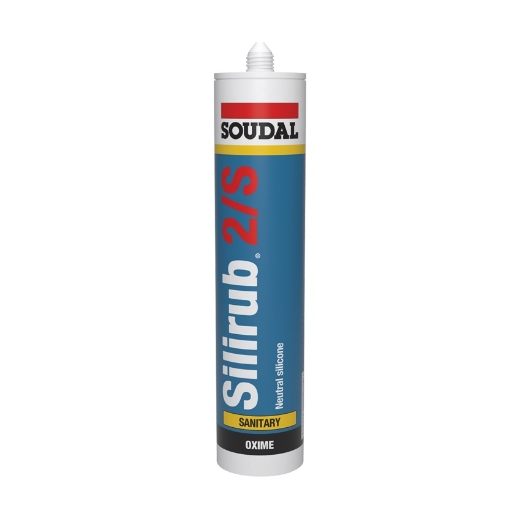
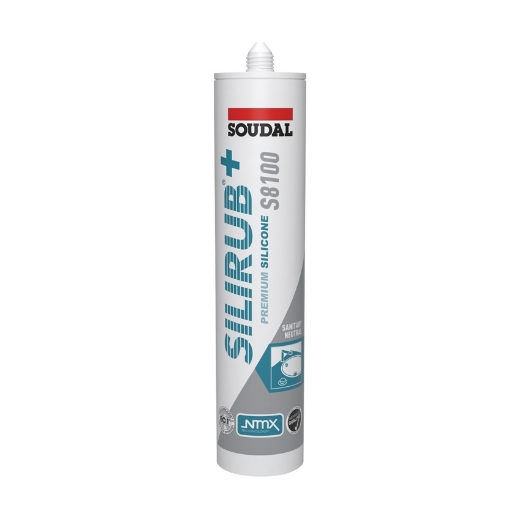
For wet areas such as the shower, bath, basin and connection joints around worktops. Choose a mould-resistant silicone sealant that stays watertight. Soudal Silirub 2S is the standard sanitary choice on ceramic tiles. Soudal Silirub+ S8100 offers extra mould-resistant protection for intensively used areas. Both are available in white and transparent.
Interior finishing & paintable
For skirting boards, walls, connections between ceiling and wall, and interior doors you want to paint over afterwards. Soudal Acryrub is the classic: easy to apply, smooth to finish and paintable with water-based paint. For specific applications where some elasticity is nonetheless desired, Soudal Silirub P2 can be considered, when in doubt, first carry out an adhesion test with your paint.
Outdoor, window frames & façade joints
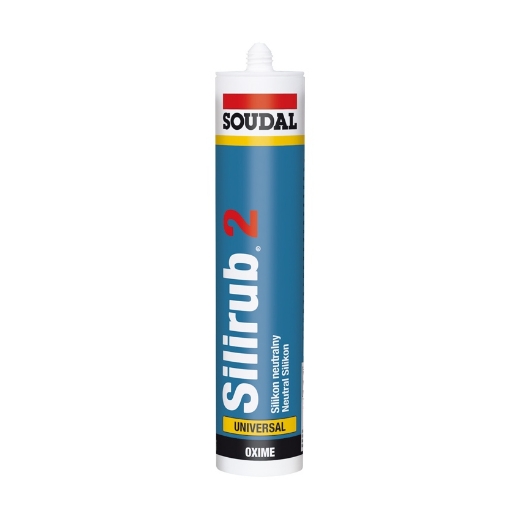
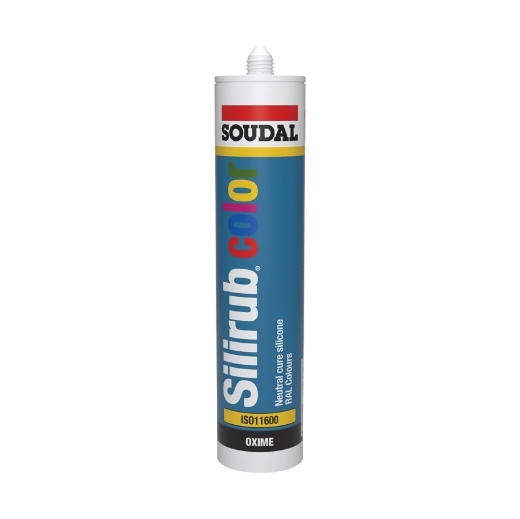
For connection joints around windows, doors, façade elements and exterior joints exposed to weather and temperature fluctuations. Soudal Silirub 2 and Soudal Silirub Color are widely used choices for outdoor applications on wood, plastic and metal. For movement joints in façades and larger exterior connections, choose Soudal Soudaseal 222LM.
Natural stone (marble, slate, granite)
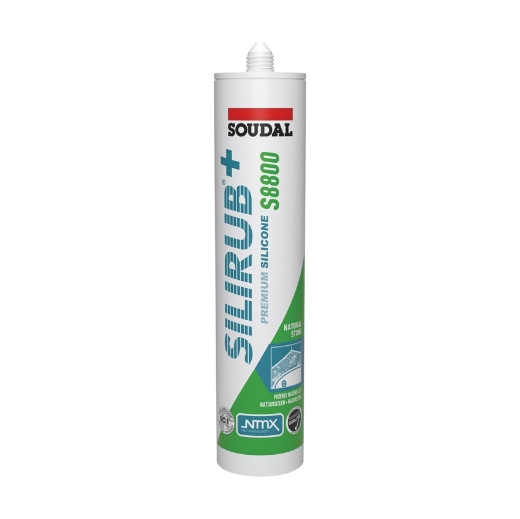
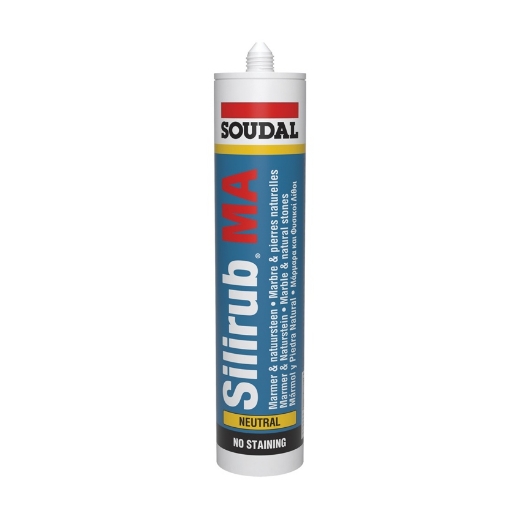
Standard silicones contain plasticisers that soak into porous stone and cause dark edge staining, this cannot be removed afterwards. If you work on or next to marble, slate, granite or other natural stone, always choose a neutral, specially developed sealant. Soudal Silirub MA and Soudal Silirub+ S8800 cure neutrally and cause no staining or edge contamination.
What to check when choosing a sealant?
Three factors determine whether a sealant stays in place for years or comes loose, cracks or shows mould after a short time.
- Substrate and material: On natural stone always use a neutral sealant to avoid staining. On painted walls or plasterboard choose a paintable sealant so you can finish the joint seamlessly. On glass, ceramics and metal silicone sealant adheres without primer; on porous or dusty substrates a primer or thorough cleaning can considerably improve adhesion.
- Environment: wet, damp or outdoors? In wet areas (shower, bath, kitchen) choose a mould-resistant silicone sealant that is water-resistant after curing. Outdoors you need a sealant that is UV-resistant and can withstand temperature fluctuations from -20°C to +80°C without coming loose or cracking. Dry interior spaces allow more choice, including paintable acrylic sealant.
- Movement in the joint: Connection joints around windows, doors, baths and sanitary fittings move due to temperature differences, settling and daily use. There, always choose an elastic sealant that can absorb the movement without cracking. A rigid sealant (such as unsuitable acrylic sealant on a moving joint) tears loose over time. Silicones stay elastic; acrylic sealant is less suitable for joints with significant movement.
Frequently asked questions about choosing the right sealant
What is the difference between silicone sealant and acrylic sealant?
Which Soudal sealant should I use in the bathroom or shower?
Which sealant is suitable for outdoors or around window frames?
Why can't I use ordinary silicone on natural stone?
Which sealant can I paint over?
How do I get a neat joint without smearing?
Posted by the Soudal sealant expert at DHZ-Proshop, your specialist in fasteners, adhesives & silicones. Webshop available 24/7 & collection point in Beerse (province of Antwerp). Questions about these products or our DIY tip? Contact our team.