A glue joint that creeps open overnight needs a different tool than a workpiece that slides across the bench mid-cut. For wood glue-ups that need long, even pressure over a wide span, you reach for a glue clamp (bar or sash clamp). For a fast, one-handed hold during assembly or repair, you grab a trigger clamp (speed clamp). For rigid, two-handed work like sawing, filing or drilling, you bolt down a bench vice. The Stanley FM L Glue Clamp spans a 900mm bar length, wide enough to close a full cabinet frame in a single pass. Pick the wrong tool and the joint reopens, the stock walks, or you fight the clamp instead of the material.
Which clamp or vice actually solves your problem? The full range of Stanley clamps and bench vices covers glue clamps, trigger clamps, C-clamps, spring clamps and bench vices for every workshop task. This guide walks through each one.
- Glue clamps (bar/sash clamps) hold sustained, even pressure for wood glue-ups; a 900mm bar spans a cabinet-width panel in one clamp.
- Trigger clamps let you clamp one-handed with a squeeze, ideal for quick repairs, drilling and assembly, but not for curing glue overnight.
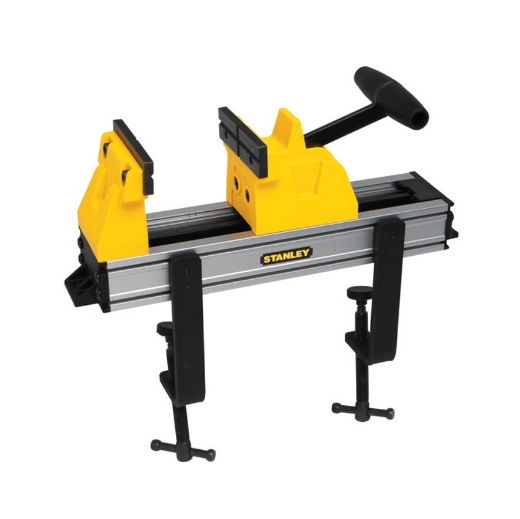
- A bench vice with a 125mm or 150mm jaw width holds metal or wood rigid for sawing, filing or drilling.
- Corner clamps hold a 90° mitre square while glue cures; spring clamps hold light parts in seconds.
- A spreader clamp, like the FatMax 800mm, both pushes apart and pulls together, useful when a normal clamp can't reach.
Which Clamp or Vice Matches Your Job? (Overview)
The right clamp depends on three things: how much force you need, how long that force must hold, and how much reach the job demands. Browse the full Stanley clamps and vices range, or use the table below to match your task to the correct tool straight away.
| Product | Key spec | Application | Ideal for |
|---|---|---|---|
| Stanley FM M Glue Clamp 300mm | 300mm bar | Small glue joints | Boxes, small frames |
| Stanley FM L Glue Clamp 900mm | 900mm bar | Panel and frame glue-ups | Cabinet doors, tabletops |
| Stanley FM XL Glue Clamp 900mm | 900mm bar, XL jaw depth | Thick or wide stock glue-ups | Workbenches, heavy furniture |
| Stanley FM S Trigger Clamp | Compact one-hand grip | Quick hold-downs | Small parts, on-site repairs |
| Stanley FM L Trigger Clamp 450mm | 450mm reach | General one-handed clamping | Assembly, drilling jigs |
| Stanley FM XL Trigger Clamp 450mm | 450mm reach, wider throat | Bulkier stock, one hand | Panels, wider boards |
| Stanley 125mm/5" Heavy Duty Vice | 125mm jaw width | Bench-mounted holding | Home workshop bench |
| Stanley 150mm/6" Heavy Duty Vice | 150mm jaw width | Heavy metal and wood work | Workshop, welding bench |
| Stanley Quick-Release Vice | Quick-release lever | Fast repositioning | Repetitive bench tasks |
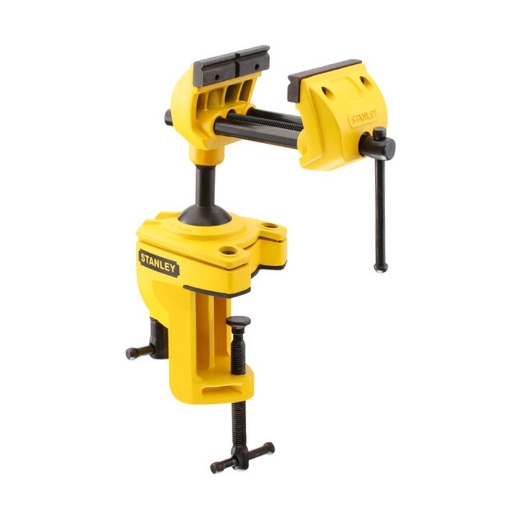
| Stanley Multifunctional Drill Press Vice | Multi-angle jaw | Angled drilling and precision holds | Drill press table |
| Stanley 150mm/6" C-Clamp | 150mm opening | Metalwork, welding fixation | Metal fabrication |
| Stanley 50mm/2" Metal Spring Clamp | 50mm jaw opening | Light, quick holding | Thin stock, jigs, hobby work |
| Stanley FatMax Spreader Clamp 800mm | 800mm, spread & clamp | Pushing apart or pulling together | Framing, tight assemblies |
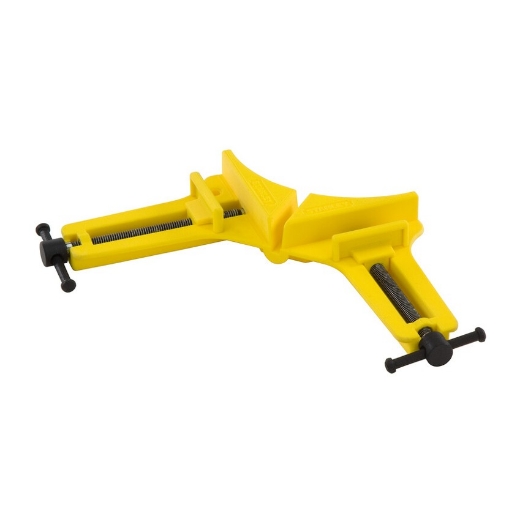
| Stanley Heavy Duty Corner Clamp | 90° corner jig | Holding mitres square | Picture frames, box corners |
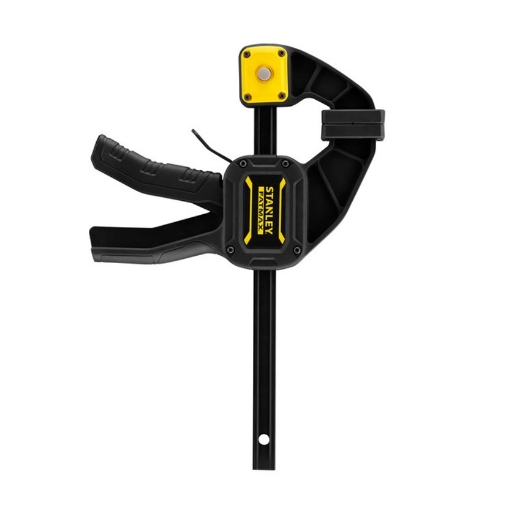
Gluing wood
Panel, frame or tabletop that needs to stay pressed while the glue cures? A bar clamp with a rigid 900mm span holds it flat and tight overnight.
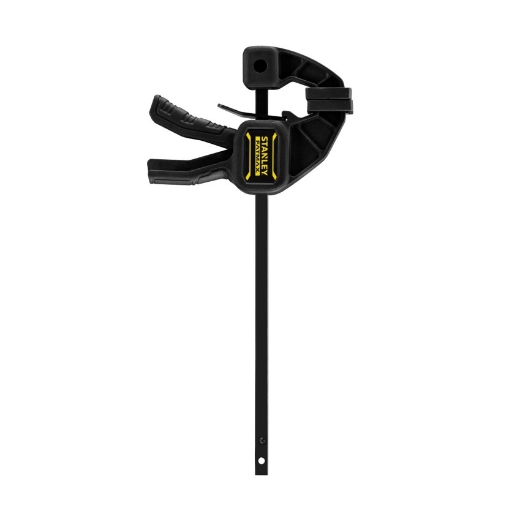
Fast, one-hand hold
Need to hold a part still with one hand while you drill, screw or measure with the other? A trigger clamp locks in a single squeeze. One of our most chosen for site work.
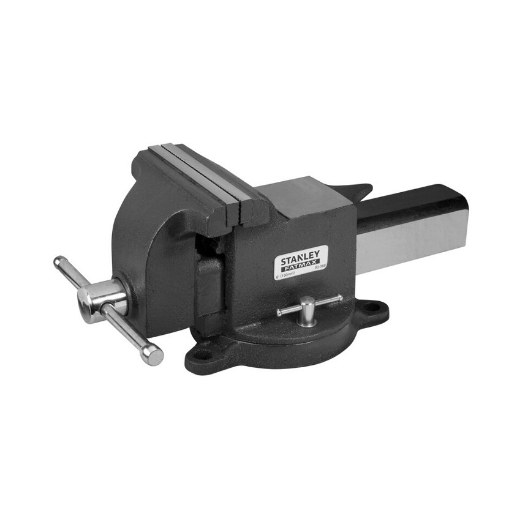
Bench-mounted rigidity
Sawing, filing or drilling metal? Bolt a 150mm jaw vice to your bench and the workpiece stops moving entirely, freeing both hands for the tool.
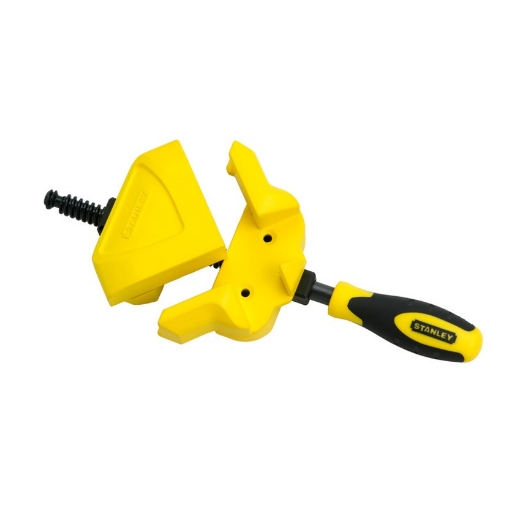
Square corners and mitres
Picture frame or box corner refusing to sit at 90°? A dedicated corner clamp holds the mitre square while the glue sets, with no clamp marks on the face.
Why Does Your Glued Joint Keep Opening Up?
Your joint opens back up because the clamp you used relaxed before the glue cured, not because the glue failed. Wood glue needs steady, uninterrupted pressure for the full clamping time listed on the bottle, often well over half an hour. A spring clamp or a light trigger clamp loses tension as the joint settles, and the gap reopens exactly where you needed it closed.
A dedicated glue clamp solves this with a rigid steel bar that does not flex under load. The Stanley FM M Glue Clamp at 300mm suits small boxes and narrow frames. Step up to the Stanley FM L Glue Clamp at 900mm for cabinet doors and tabletops, and reach for the Stanley FM XL Glue Clamp, also 900mm but with a deeper jaw, when the stock itself is thick or wide.
Why Does Your Workpiece Slip Mid-Cut or Mid-Drill?
Your workpiece slips because you are holding it with your hand instead of a clamp, and hands lose grip the moment you apply real pressure with a saw or drill. A trigger clamp fixes this in seconds: squeeze the handle, the jaw locks, and both hands are free for the tool.
Size the trigger clamp to the job. The Stanley FM S Trigger Clamp is compact and quick, one of our most chosen clamps for small parts and on-site fixes. The Stanley FM L Trigger Clamp at 450mm reaches further for general assembly, and the Stanley FM XL Trigger Clamp, also 450mm but with a wider throat, takes on bulkier boards without running out of jaw depth.
In our Beerse store, customers reaching for a quick one-handed hold pick up the FM S Trigger Clamp nine times out of ten. It lives in the tool bag, not the workshop drawer.DHZ-Proshop vakteam, Beerse
A trigger clamp is not built for overnight glue-ups though. Its pistol grip gives you speed, not the sustained hold a curing joint needs. Use it for drilling jigs, quick repairs and holding parts during assembly, and switch to a bar clamp once glue enters the picture.
Why Do You Need a Bench Vice Instead of Just More Clamps?
You need a vice when the job demands two hands on the tool and zero movement from the workpiece, something no handheld clamp can guarantee. A vice bolts permanently to the bench and grips the material from both sides at once, which is why sawing, filing, chiselling and metalwork all start with the vice, not a clamp.
Jaw width decides what fits. The Stanley 125mm/5" Heavy Duty Vice handles most home workshop tasks, while the Stanley 150mm/6" Heavy Duty Vice takes on wider stock and heavier metalwork. If you reposition the workpiece constantly, the Stanley Quick-Release Vice opens and closes with a single lever pull instead of turning the handle every time. For angled or repeated drilling on a drill press table, the Stanley Multifunctional Drill Press Vice holds the part at the exact angle you set.
Which Clamp Do You Need for Corners, Metalwork or Spreading?
Standard bar and trigger clamps cannot hold a 90° corner, weld metal in place, or push two parts apart, so a handful of specialty clamps fill those exact gaps. Pick the shape that matches the geometry of the problem, not just the size.
A Stanley Heavy Duty Corner Clamp locks a mitre at a perfect right angle while glue sets, essential for picture frames and box corners where a straight clamp cannot get purchase. A Stanley 150mm/6" C-Clamp is the metalworker's default for welding and fabrication, gripping steel with a solid screw thread that does not slip under heat. For light jobs, a Stanley 50mm/2" Metal Spring Clamp snaps shut in under a second, ideal for jigs and thin stock that does not need heavy force. When you need to push two parts apart rather than pull them together, for example fitting a tight cabinet, the Stanley FatMax Spreader Clamp at 800mm works both ways.
Common Mistakes
- Using a trigger clamp for a glue-up: it loses tension overnight and the joint reopens exactly where you needed it closed.
- Clamping bare wood without a caul: the metal jaw leaves permanent dents in the surface, right where the finish matters most.
- Choosing a vice jaw width that doesn't fit the stock: a 125mm vice crushes thin material and a jaw that's too narrow won't hold wide stock securely.
- Forcing a spring clamp onto heavy stock: the light spring tension isn't built for that load, and the clamp slips or snaps back.
Browse the complete range via our Stanley clamps and bench vices category.
Frequently Asked Questions About Clamps and Vices
What's the difference between a glue clamp and a trigger clamp?
Can I use a trigger clamp instead of a bar clamp for glue-ups?
Which clamp is best for gluing a wooden frame?
What jaw width bench vice do I need for a home workshop?
Which clamp holds a mitre joint square while the glue dries?
How much clamping force does a bench vice need for metalwork?
Compiled by the vakteam of DHZ-Proshop, your DIY and trade specialist with a shop and pickup point in Beerse. What we advise most often in the store: match the clamp to how long the pressure needs to hold, not just how hard it can squeeze. Questions about which Stanley clamp or vice fits your job? Contact our team or browse the full Stanley clamps and vices range.