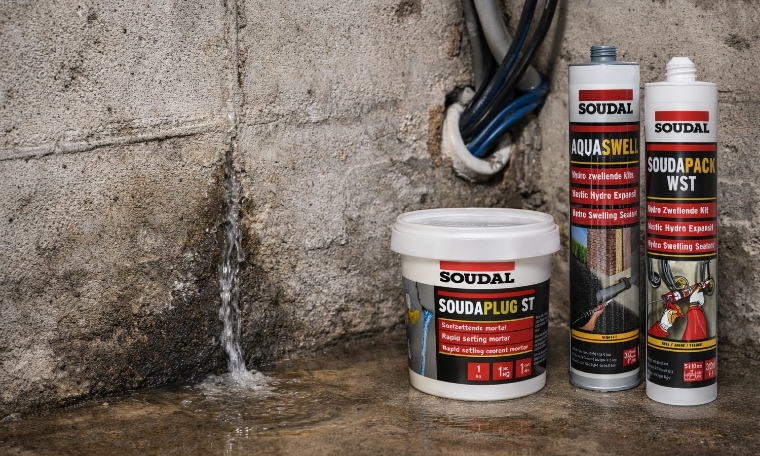
Waterproof cellar penetrations: three products, one system. Penetrations for cables and pipes are the weakest points in cellars and foundations, they are the places where water pressure pushes hardest and where ordinary sealant fails first. Soudaplug ST, Aquaswell and Soudapack WST each solve a different part of the problem. Sometimes you use one, sometimes all three in sequence. Below you'll quickly see which product suits your situation and how to build up the seal for a lasting result.
Which product for which situation?
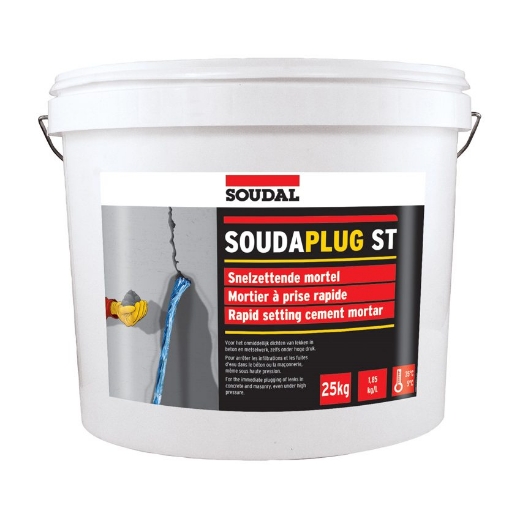
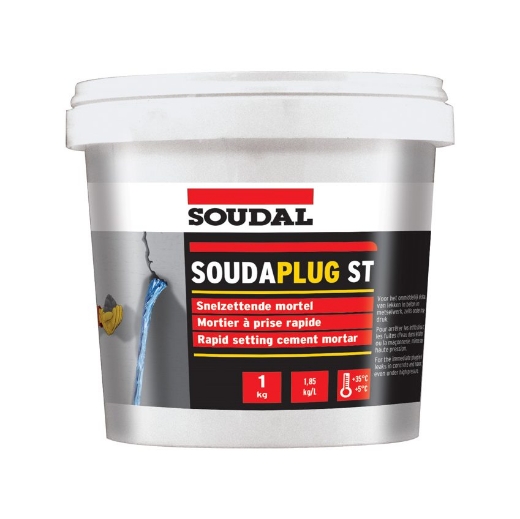
Running water & active leakage, Soudaplug ST
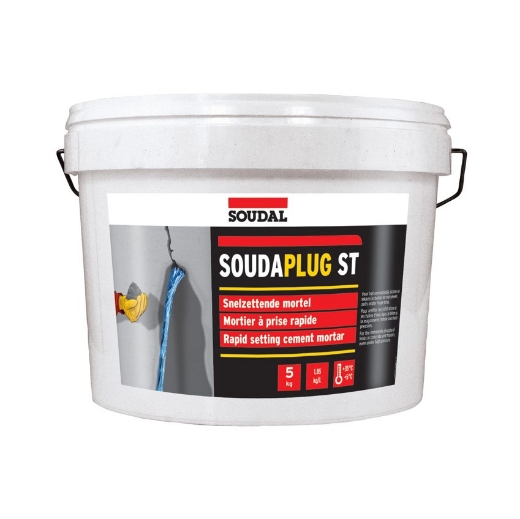
Soudal Soudaplug ST, fast-setting cement mortar. Stops running water and spurting leaks in concrete and masonry within 1–2 minutes. Knead by hand and press into the leak. Available in 1kg, 5kg and 25kg.
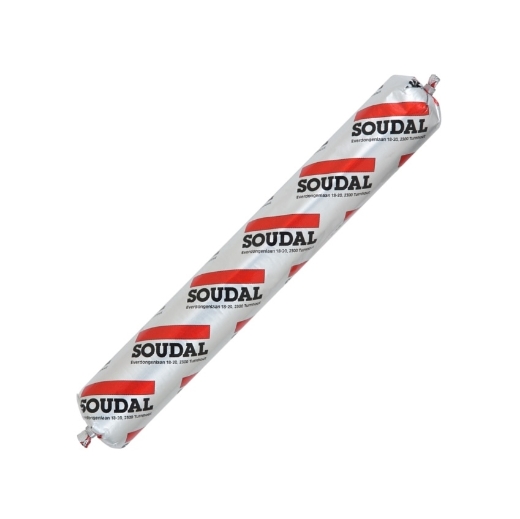
Cables & pipes through concrete, Aquaswell swelling sealant
Soudal Aquaswell, PU sealant that swells up to 450% on contact with water. For watertight and gastight sealing of cable penetrations and pour joints in concrete. The more water pressure, the tighter the seal. Cartridge 310ml or sausage 600ml.
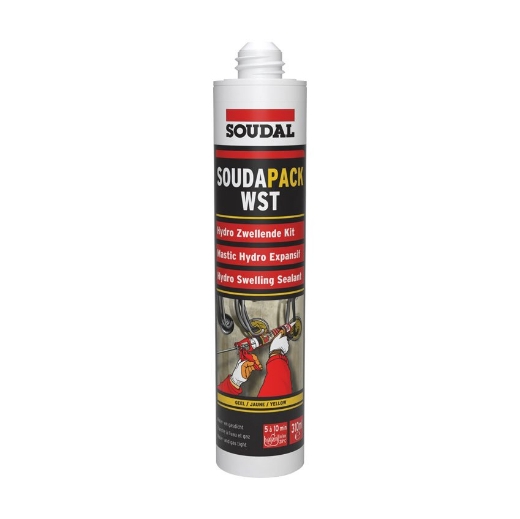
Large openings & radon sealing, Soudapack WST
Soudal Soudapack WST, plastic paste, also adheres to a damp substrate. Permanently flexible: new cables can be routed through later without reworking. Blocks water and harmful gases (radon). Immediately watertight and gastight after application.
Persistent groundwater, 2-phase approach
With constant groundwater pressure you use both: phase 1 stop the running water with Soudaplug ST, phase 2 apply the final elastic seal with Aquaswell or Soudapack WST. One product alone is not enough here.
Step-by-step plan, how to build a leak-free penetration
The order of the steps is just as important as the product choice. The wrong order, e.g. applying Aquaswell over a still-active leak, will not give a watertight seal.
- Step 1, analyse the type of leak before you start: Distinguish two situations: static moisture (wet or soaked patches, seeping water) and dynamic water (running water, spurting leaks). With static moisture you can get straight to work with Aquaswell or Soudapack WST. With dynamic water you must first stop the running water with Soudaplug ST, otherwise you simply wash away the after-treatment.
- Step 2, expose the opening to a depth of at least 5–7cm: Remove loose concrete parts, moss, rust and old sealant residue around the penetration. A superficial layer of 1–2cm of sealant is useless under water pressure, the sealant gets pushed out. Thoroughly degrease the pipe or cable: PVC and plastic pipes often have a factory coating that prevents adhesion. Use Soudal Cleaner & Degreaser on the pipe surfaces.
- Step 3, stop the active leak with Soudaplug ST (only with running water): Mix a small amount of Soudaplug ST powder with water into a stiff, kneadable mass. Work quickly: the mortar starts to set within 1–2 minutes. Press the mass firmly into the leak and hold it for 1–2 minutes under hand pressure. The water stops immediately. Allow the Soudaplug to harden for at least 15–20 minutes before continuing with the final seal.
- Step 4, apply the final seal with Aquaswell or Soudapack WST: Inject the sealant or paste deep into the space around the cable or pipe, at least 5cm in depth, evenly all around. Make sure the pipe sits centrally in the opening so the sealant can be applied at an even thickness everywhere. With Aquaswell: leave 1cm free at the front for the finishing layer (Soudaplug ST or shrink-free mortar). With Soudapack WST: the paste is immediately watertight and gastight after application, no further finishing layer needed. For large openings: first use a backing of PE foam or Soudaplug ST to reduce the volume, then the final 5–10cm of Aquaswell or Soudapack WST.
- Aquaswell vs. Soudapack WST, when to choose which: Choose Aquaswell when you want a maximum watertight barrier that only becomes tighter under pressure, ideal for penetrations with active groundwater pressure. The swelling action up to 450% makes it difficult to add cables later. Choose Soudapack WST when the opening will need to be extended later, the paste remains permanently plastic, so you can route new cables through without breaking the seal. Also the first choice for radon- and gastight sealing in cellars and crawl spaces.
- Multiple cables through one opening: Ensure at least 5–10mm of spacing between the cables so the sealant or paste can flow completely around each cable. Too little space = insufficient encapsulation = leak path along the cable sheath. Larger openings with many cables are best processed in two phases: first partially fill the space, let it set for 10 minutes, then top up the rest.
Frequently asked questions
Can I seal a leaking cellar penetration from the inside?
What is the advantage of Aquaswell over ordinary sealant?
What is the difference between Aquaswell and Soudapack WST?
How do I make a penetration gastight against radon?
Is Soudaplug ST also suitable for cracks in concrete walls?
What if the penetration is too large for sealant alone?
Is the system resistant to sewage water or chemicals?
Posted by the Soudal sealant expert at DHZ-Proshop, specialist in fastening materials, adhesives & silicones. Webshop available 24/7 & collection point in Beerse (province of Antwerp). Questions about the right cellar sealing for your situation? Contact our team.