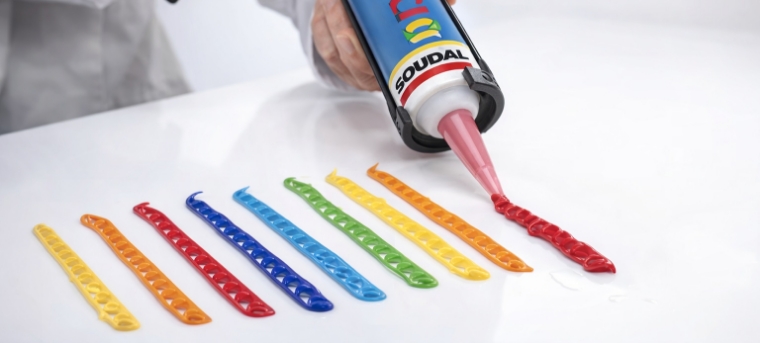
Which colour of sealant should you choose? Colour is more than aesthetics: white shows mould faster, dark shows limescale faster, and transparent stands out if the substrate isn't perfect. Below you can quickly choose by situation, followed by everything about maintenance, yellowing risk and coloured sealant on natural stone.
Which colour of sealant suits your situation?
Browse the full Soudal sealant range in our webshop. Want to first determine which type of sealant you need? Read our guide choosing the right sealant.
White sanitary, classic but requires maintenance
White is the standard for the bathroom, shower and washbasin on white or light tiles. Classic and timeless, but it shows yellowing, mould spores and limescale build-up faster than any other colour. The solution isn't the colour but the sealant: Silirub 2S in white for standard use, Silirub+ S8100 for intensive use or poor ventilation, the anti-mould formulation slows discolouration significantly. A smooth joint = holds less dirt. More on mould prevention: preventing mould in sealant joints.
Transparent, only on a perfect substrate
Transparent sealant seems invisible but rarely is in practice. On glass, mirrors and glass mosaic it looks great when the joint is perfectly finished and the substrate is completely even. On ceramic tiles with adhesive residue, unevenness or colour differences along the joint edge, transparent actually becomes more noticeable than white, every irregularity is visible through the sealant. Soudal Glaskit TS is the recommended sealant for glass connections and mirrors. For glass in window frames: see our guide putty or Silirub Tradition.
Coloured sealant, to match dark or coloured finishes
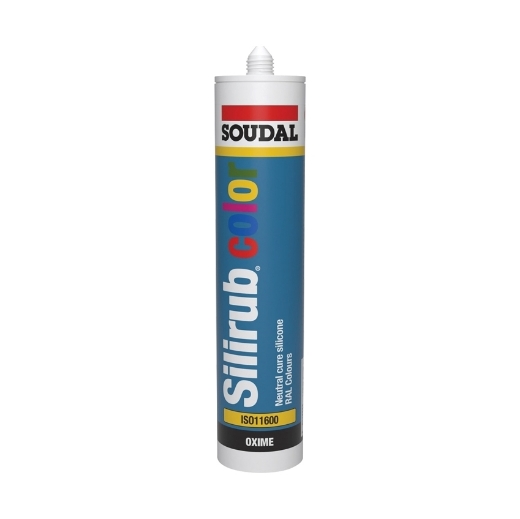
With dark tiles, anthracite taps or a coloured shower wall, a matching coloured sealant looks calmer than a white joint that stands out. Silirub Color is available in several colours for sanitary and outdoor applications. Note: dark sealants show limescale film and water droplet marks faster than light colours, the balance depends on your water type and cleaning. Fix All Flexi combines colour with adhesive and sealant properties for creative applications. For coloured outdoor window frames: sealant for windows and doors.
Overpaintable, decide the colour afterwards
For interior window frames, skirting boards and wall–ceiling connections you'll want to paint the sealant in the wall colour afterwards. Soudal Acryrub can be overpainted with water-based paint after 1–2 hours, you decide the final colour yourself. Do you expect slight movement in the joint (e.g. wooden frames that work)? Then choose Silirub P2: elastic and overpaintable. Read more in our guide silicone vs acrylic.
White, transparent and colour: what you need to know about maintenance and ageing
Every colour behaves differently in practice. These are the points that make the difference when choosing.
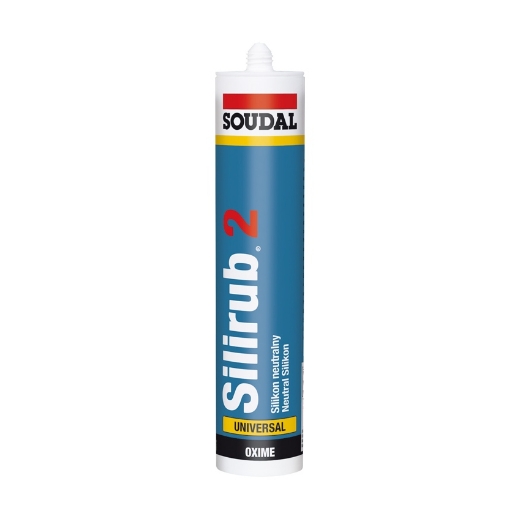
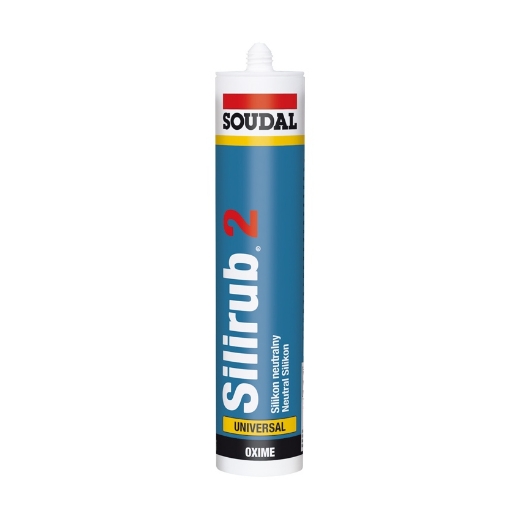
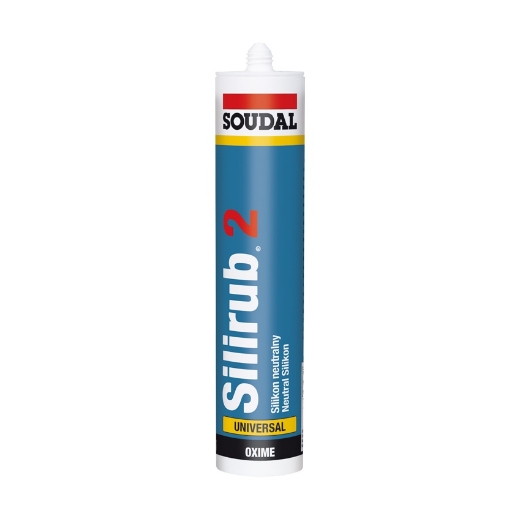
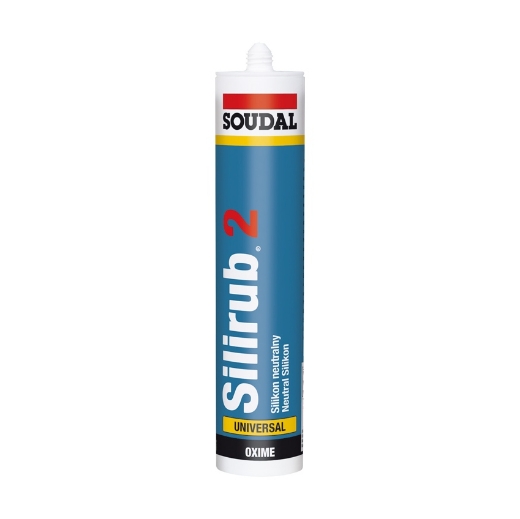
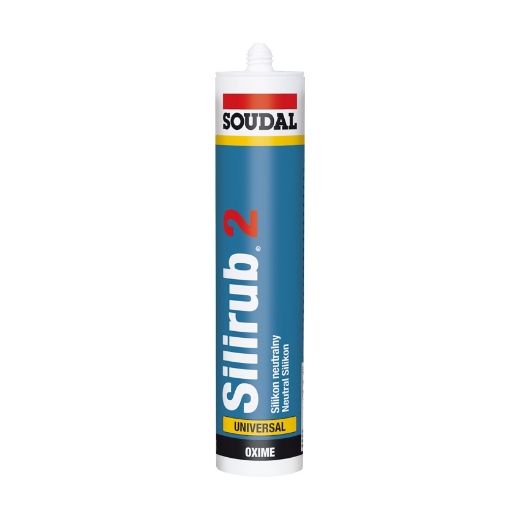
- White sealant and yellowing: Standard white silicone sealant can yellow over time due to UV exposure (exterior work) or due to soap residue and body fats (sanitary). Yellowing is not a manufacturing fault but an ageing process that occurs faster with cheaper sealants. For sanitary applications, always choose a sealant with explicit anti-yellowing protection such as Silirub 2S or Silirub+ S8100. Outdoors, a UV-resistant sealant such as Silirub 2 yellows considerably more slowly than universal silicones.
- Transparent sealant: when yes, when no: Transparent works excellently on glass, mirrors and glass mosaic where the joint is fine and the substrate completely even. On porous or stained substrates, transparent is a risk, irregularities are visible through the sealant. Moreover, transparent sealant ages less "neutrally" than white: after a few years it can turn yellowish or cloudy, which is more noticeable on a coloured substrate than white, which simply stays white.
- Dark sealant and limescale film: Dark or anthracite-coloured sealant in the shower shows limescale residue and water droplet marks much faster than light colours, especially in hard water areas. If you choose dark sealant, expect more intensive daily wiping of water or frequent use of a limescale cleaner. On outdoor window frames (dark frames), limescale film is less of a problem, but dirt and moss growth are more visible on dark outdoor sealant joints.
- Coloured sealant on natural stone: always choose the right sealant: On marble, granite or blue limestone, regardless of the chosen colour: only use neutral silicone sealant or hybrid sealant specifically certified for natural stone. Standard coloured silicones may contain plasticisers that cause edge staining, a permanent dark mark in the stone that is irreparable. Silirub MA and Silirub+ S8800 are safe for natural stone. More: sealing on natural stone.
- Joint finishing determines the result more than colour: A smooth, neatly finished joint stays attractive longer and holds less dirt, regardless of the colour. Always use masking tape along both joint edges and tool off immediately with a finishing tool. A convex, built-up joint holds soap and moisture and gets dirty faster, regardless of which colour you chose. For the full step-by-step plan: sealing a bathroom.
- Maintenance tip per colour: White: rinsing weekly and degreasing monthly with a neutral cleaner prevents most discolouration. Dark: wiping away water after each use is the easiest way to prevent limescale film. Transparent: remove soap film as quickly as possible, it is more visible on transparent than on white sealant. Coloured sealant on exterior work: clean annually with water and a soft brush.
Frequently asked questions about the colour of sealant
Does white sealant always get dirty faster than coloured sealant?
Is transparent sealant really invisible in the shower?
Can I use coloured sealant on marble or blue limestone?
Which colour is the easiest to maintain?
Can I change the colour of sealant by painting over it?
Does white sealant always yellow over time?
Posted by the Soudal sealant expert at DHZ-Proshop, your specialist in fasteners, adhesives & silicones. Webshop available 24/7 & collection point in Beerse (Antwerp province). Unsure about the best colour or sealant for your project? Contact our team.